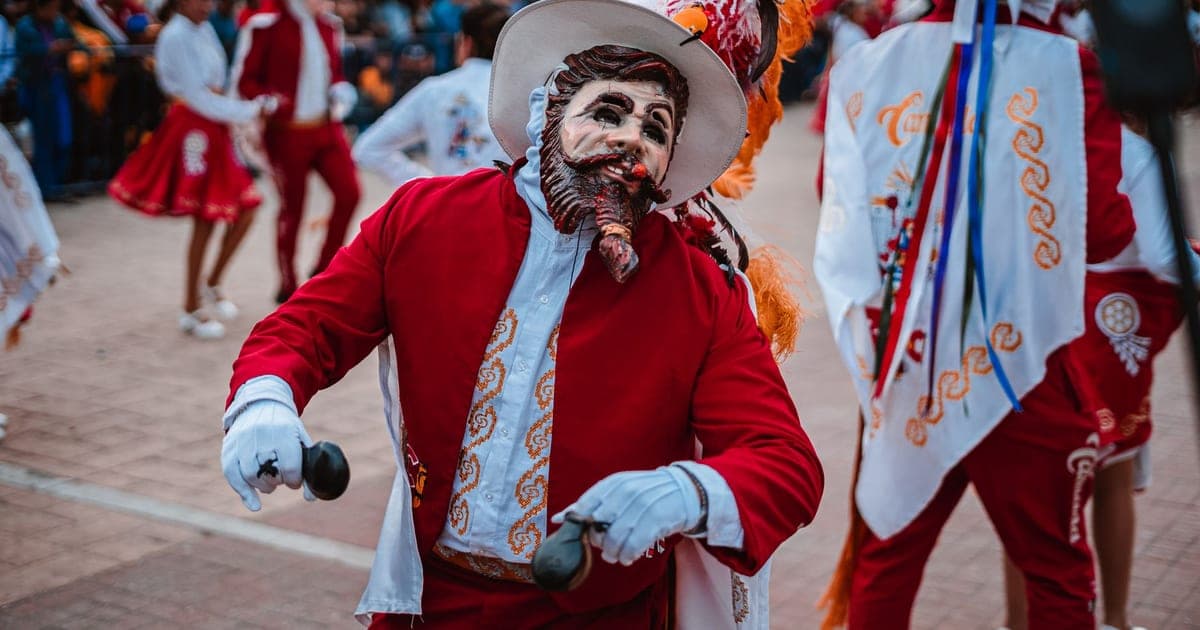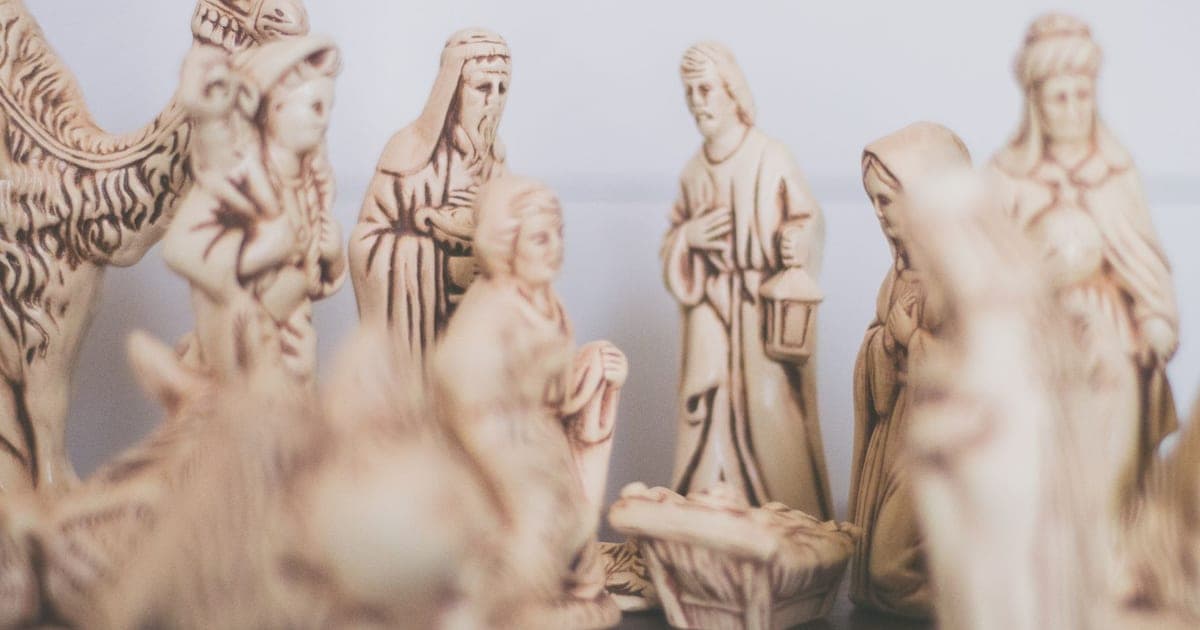
Epiphany 2027 falls on Wednesday 6 January for Western churches and many Orthodox churches, and on Tuesday 19 January for churches that keep the Julian calendar, such as North Macedonia's, and for Ethiopia's Timkat. The celebrations start the night before: Spain's Three Kings parades roll out on Tuesday 5 January, Italy's Befana fills stockings that night, and on Wednesday priests from Piraeus to Florida throw crosses into the water for swimmers to chase.
Below are 13 celebrations worth building a trip around, each with the 2027 date, where to stand, whether the day is a public holiday, January weather from the World Meteorological Organization (WMO), and the honest downside. For the weeks either side, see our guides to where to spend Christmas and where to go in January.
Every date, time, price and rule here was read on organisers' pages, government sites and official gazettes, or in local press where those were silent, on 4 and 5 October 2026. Most 2027 programmes are not published yet; where that is the case we say so and give the 2026 timings.
Epiphany 2027 at a Glance
| Destination | Why then | Key 2027 date(s) | January weather (avg high/low) | Rough cost/vibe |
|---|---|---|---|---|
| Alcoy, Spain | Officially Spain's oldest parade | Mon 4 Jan (Bando), Tue 5 Jan | Alicante 17/6 °C (63/43 °F) | Free, small town |
| Madrid, Barcelona, Seville | The biggest parades | Tue 5 Jan, evening | 10/3 to 16/6 °C (50/37 to 61/43 °F) | Free, huge crowds |
| Urbania, Italy | The Befana's own festival | TBA (4–6 Jan in 2026) | Ancona 9/1 °C (49/35 °F) | €8 day ticket in 2026 |
| Venice, Italy | Befana rowing race | Wed 6 Jan, morning | 7/0 °C (44/32 °F) | Free |
| Warsaw, Poland | Three Kings procession | Wed 6 Jan, 11:45–20:00 | 1/-4 °C (33/24 °F) | Free, holiday |
| Bavaria and Austria | Sternsinger at the door | Days up to Wed 6 Jan | Munich 3/-4 °C (37/25 °F) | Free, holiday |
| Juana Díaz, Puerto Rico | Fiesta held since 1884 | Tue 5 and Wed 6 Jan | San Juan 28/22 °C (83/72 °F) | Free, holiday |
| Tarpon Springs, Florida | Cross dive in a bayou | Wed 6 Jan | Tampa 21/11 °C (70/52 °F) | Free, working day |
| Piraeus and Thessaloniki | Harbour cross dives | Wed 6 Jan, morning | Athens 13/5 °C (55/41 °F) | Free, holiday |
| Kalofer, Bulgaria | Horo dance in an icy river | Wed 6 Jan (08:00 in 2024) | Sofia 2/-5 °C (36/23 °F) | Free, tiny town |
| Ohrid, North Macedonia | Lake cross dive | Tue 19 Jan | 6/-2 °C (43/29 °F) | Free, off-season |
| Addis Ababa, Ethiopia | Timkat | Mon 18 and Tue 19 Jan | 24/8 °C (75/46 °F) | Free, check advice |
| Goa, India | Village feasts | Wed 6 Jan | 32/20 °C (89/67 °F) | Free, warm and dry |
Epiphany 2027 Dates, and Why Some Churches Celebrate on 19 January
Epiphany marks Christ's manifestation to the world. Western churches mainly remember the Magi; Eastern churches celebrate Christ's baptism in the Jordan, hence their water blessings.
The traditional date is 6 January. The Orthodox churches of Greece and Bulgaria keep it too. Churches on the older Julian calendar celebrate on the Gregorian 19 January, because the two calendars are 13 days apart. In the United States the Catholic Church marks Epiphany on the Sunday between 2 and 8 January: 3 January in 2027. Ethiopia's Timkat is 19 January, or the 20th in leap years, as in 2024 (next in 2028).
| Celebration | 2027 date | Public holiday? |
|---|---|---|
| Spain: Cabalgatas / Día de Reyes | Tue 5 Jan / Wed 6 Jan | Yes (every region in 2026) |
| Italy: La Befana / Epifania | Night of 5 Jan / Wed 6 Jan | Yes |
| Poland: Trzech Króli | Wed 6 Jan | Yes |
| Austria; Bavaria | Wed 6 Jan | Yes |
| Puerto Rico: Día de Reyes | Wed 6 Jan | Yes |
| Mexico: Día de Reyes | Wed 6 Jan | No |
| United States | Wed 6 Jan (Catholic liturgy Sun 3 Jan) | No |
| Greece: Theophany | Wed 6 Jan | Yes |
| Bulgaria: Yordanovden | Wed 6 Jan | No |
| North Macedonia: Vodici | Tue 19 Jan | For Orthodox citizens |
| Ethiopia: Ketera / Timkat | Mon 18 / Tue 19 Jan | Yes (Timkat) |
| Ethiopia: Genna (Christmas) | Thu 7 Jan | Yes |
| India (Goa): Three Kings feasts | Wed 6 Jan | Not confirmed |
The Eve: Parades on 5 January
1. Alcoy, Spain — Officially Spain's Oldest Kings' Parade
Alcoy (Alcoi), a town in Alicante province, holds what the 2011 decree protecting it as cultural heritage calls Spain's oldest Kings' parade, first documented in 1866 and in its defining form from 1885.
It runs over two evenings. On Monday 4 January comes the Bando Real: a royal envoy rides through town announcing the Kings (the decree puts the start at about 19:00), followed by donkeys carrying postboxes for children's letters, while bonfires appear on the Sierra de Mariola. At dusk on Tuesday 5 January, more than 1,000 people walk a route of just over 2.5 km. The Kings have ridden camels since 1972, and their pages climb long ladders to hand presents onto balconies. The night peaks at the nativity scene with fireworks and Handel's Magnificat, and ends around 21:30. The 2027 programme was not out on 4 October 2026.
Alicante's WMO normals are 17/6 °C (63/43 °F) in January, but Alcoy is inland and the decree itself mentions the cold of parade night. The Alcoy–Xàtiva railway has been closed since March 2025 for works due to end in September 2027, with Renfe running replacement buses. Watching is free; book transport and a room early. 6 January is a public holiday across the Valencian Community.
The trade-off: the pages still darken their faces with black make-up, which The Local has described as blackface; the town defends it as tradition.
2. Madrid, Barcelona and Seville — The Big-City Cabalgatas
All three run on the evening of Tuesday 5 January 2027; none had a 2027 timetable out by 4 October 2026, so here is 2026.
In Madrid the parade left Plaza de San Juan de la Cruz at 18:00 and followed the Castellana and Recoletos to Cibeles, where the Kings spoke at about 21:00 before a pyromusical show. Its floats handed out 1,200 kg of sweets. The Castellana by Nuevos Ministerios closed to traffic from 09:30.
Barcelona starts at sea: the Kings landed from a Golondrina boat at Portal de la Pau at 16:30, and the mayor gave them a key that opens every door in the city. The parade, 1,300 performers over 1.2 km, left the Ciutadella end at 18:00 and finished at Montjuïc's Font Màgica, its last checkpoint timed at 21:10.
Seville's Ateneo has run its Cabalgata since 5 January 1918: 33 floats, about 1,000 "Bedouins", 30 mounted pages and 10 bands. In 2026 it left the University around 16:15 and took about six hours.
January normals (WMO): Madrid 10/3 °C (50/37 °F), Barcelona 14/5 °C (57/41 °F), Seville 16/6 °C (61/43 °F). Watching is free; book a room near the route early. Presents appear on the morning of the 6th, a national holiday, along with the roscón: whoever finds the dried bean pays for it.
The trade-off: scale means crowds, and Seville's six-hour route makes a very long night for small children.
6 January: Befana, Magi and Sternsinger
3. Urbania, Italy — The Befana's Home Town
Italy's Befana is the old woman on a broom who fills children's stockings on the night of 5–6 January. Urbania, a small inland town in the Marche, has adopted her: its Festa Nazionale della Befana reached its 29th edition on 4–6 January 2026, and 2027 dates were not published by 4 October 2026.
In 2026 gates opened at 10:00, with dance, puppet shows and street music. The set pieces: the Befana coming down the bell tower at 16:00 and 18:30 to throw sweets (played by the Marche alpine and cave rescue team), and the parade of a record-sized stocking (17:00 to 18:00, depending on the day). Her "house" opens too, with a bedroom, a garage for brooms and a cauldron for coal.
Tickets in 2026: free under 10 and for residents; adults €8 for a day, €12 for two, €15 for three. Take a train to Pesaro or Fano on the Adriatic line and a bus on, or a bus from Rome Tiburtina to Urbino and a local bus. Drivers get free car parks and a shuttle.
Ancona, the nearest WMO city, averages 9/1 °C (49/35 °F) in January, and Urbania sits inland: the 2026 festival was snowed on for all three days and moved its shows indoors. Epiphany is a public holiday in Italy.
The trade-off: a small inland town with real snow risk, so book a bed early and keep the plan flexible.
4. Venice, Italy — The Befane Race on the Grand Canal
On the morning of 6 January, five veteran rowers of the Reale Società Canottieri Bucintoro dress as the Befana and race on the Grand Canal. The Regata delle Befane began as a dare between two members at the club's 1978 Christmas dinner; finalists must still be members aged 55 or over with at least three straight years in the club, rowing Venetian-style in mascareta boats.
In 2026 (the 45th edition) the day ran: 08:30 dressing at the club's Magazzini del Sale base, 10:00 water procession, 10:30 a giant stocking displayed at Rialto, 11:00 start with the finish under the Rialto Bridge, 11:30 crowning of the year's Befana. Expect the same shape on Wednesday 6 January 2027; the club had not posted a 2027 notice by 4 October 2026.
Watching is free. Venice averages 7/0 °C (44/32 °F) in January, and the 2024 race was cancelled for bad weather. In Rome (12/3 °C, 53/38 °F), Piazza Navona's Christmas fair opens in December and runs until 6 January, when the Befana arrives; our Christmas markets guide covers the weeks before.
The trade-off: it is a single morning race, so get to the Rialto end early, and a bad forecast can cancel it.
5. Warsaw, Poland — The Three Kings Procession
Poland made 6 January a public holiday again from 2011, and the Orszak Trzech Króli (Three Kings Procession) has turned it into a nationwide street event. It began in 2009 as a nativity play by pupils of one Warsaw school; in 2026 it ran in 941 places in Poland and several abroad, and the organisers sent out more than 600,000 paper crowns and 150,000 carol books.
Warsaw's 2027 procession is already scheduled: Wednesday 6 January, 11:45 to 20:00, from the Copernicus Monument at Nowy Świat 72 along Krakowskie Przedmieście to Plac Zamkowy (Castle Square), under the motto "Pokój na ziemi" (Peace on earth). In 2026 volunteers handed out more than 50,000 crowns in Warsaw, the Kings paid homage at the nativity on Castle Square, and the crowd danced a polonaise to the carol "Bóg się rodzi". The organisers say it is open to everyone, whatever their beliefs, and their pages list no fee or registration.
Warsaw's WMO normals are 1/-4 °C (33/24 °F), with some precipitation on about 16 January days. Elsewhere in Poland, several hundred towns hold their own processions.
The trade-off: it is a religious procession sung in Polish, and the public holiday means planning meals and museum visits around holiday hours.
6. Bavaria and Austria — The Sternsinger at the Door
Here the Kings come to you. Groups of children dressed as Caspar, Melchior and Balthasar go door to door, sing, collect donations for charity and chalk a blessing over the door: 20-C+M+B-27, read as "Christus mansionem benedicat" (Christ bless this house) or as the Kings' initials. Austria's Catholic youth movement took up the New Year custom in 1954; Germany's national campaign dates from 1959, and Sternsingen joined Germany's inventory of intangible cultural heritage in 2015.
6 January is a public holiday throughout Austria and Bavaria. For a set-piece event, Salzburg's Pongau region stages a big Perchten run, with fearsome "ugly" Perchten ahead of "beautiful" ones in headdresses of up to 40 kg, that rotates between Altenmarkt, Bad Gastein, Bischofshofen and St. Johann. St. Johann hosted on 5 January 2025; the 2027 host and date were not published by 4 October 2026.
January normals (WMO): Munich 3/-4 °C (37/25 °F), Vienna 3/-2 °C (37/28 °F). No booking needed: stay in a residential part of a Catholic town around New Year and the Sternsinger may knock.
The trade-off: there is no fixed time or place, and the holiday brings Sunday-style hours, so it works best added to a ski or city stay.
7. Juana Díaz, Puerto Rico — Three Kings Day as an Official Holiday
Puerto Rico keeps Three Kings Day as an official holiday: the government's 2027 list includes Wednesday 6 January, Día de Reyes. Children traditionally gather grass on the eve and leave it in a box for the Kings' animals, and Puerto Rican tradition pictures the Kings on horseback.
One of the island's best-known celebrations is in Juana Díaz, in the south next to Ponce. Its Fiesta de Reyes was first held in January 1884 at the initiative of a Spanish-born priest, Valentín Echevarría. In 2019 the programme filled Plaza Román Baldorioty de Castro from 14:00 on 5 January with music and boxes for children's offerings, then on 6 January a 10:00 parade of Kings, shepherds and townspeople, the prophecies and a midday Mass. The town also has the Casa Museo de los Reyes on road PR-14, described as the first museum in Spanish-speaking America devoted to the Three Kings tradition. The 2027 programme was not published by 4 October 2026.
Juana Díaz borders Ponce and is about an hour south of San Juan by road. San Juan's WMO normals are 28/22 °C (83/72 °F) in January.
The trade-off: it is a small-town fiesta with a programme that appears late, so rent a car and keep your base flexible.
8. Tarpon Springs, Florida — The Cross Dive in Spring Bayou
St. Nicholas Greek Orthodox Cathedral in Tarpon Springs has held its Epiphany cross dive for close to a century; its list of cross retrievers starts in 1920. The day begins with Orthros and the Divine Liturgy at the cathedral, 36 N Pinellas Ave, then clergy and faithful process to Spring Bayou. After the waters are blessed, a young woman releases a white dove, the cross is thrown, and Orthodox boys aged 16 to 18 from the area's parishes dive for it. Whoever surfaces with it is considered blessed for the year; the 1974 retriever is now Archbishop of Thyateira and Great Britain. In 2026 the dive was scheduled for 13:00 to 14:00, with an Epiphany Glendi festival afterwards until 18:00.
In 2027 the dive falls on Wednesday 6 January, a normal working day in the US, and the cathedral had not posted 2027 times by 4 October 2026. Watching from the shore is free. There are two public car parks a block from the cathedral, plus street parking. Tampa's WMO normals are 21/11 °C (70/52 °F).
The trade-off: you watch a long church service for a few moments of diving, and the weekday date means taking leave.
Theophany: Crosses in Cold Water
9. Piraeus and Thessaloniki, Greece — Theophany on the Waterfront
Greece calls the feast Theophany or Ta Fota (the Lights) and keeps it on 6 January as a public holiday. Priests across the country throw a cross into the water and swimmers race to retrieve it.
The national set piece is Piraeus. On 6 January 2026 the Liturgy at Agia Triada church, led by the Metropolitan of Piraeus, was followed by the Blessing of the Waters in the presence of the President of the Republic, with Navy and Coast Guard ships rendering honours and serving and retired military personnel diving for the cross. On Epiphany 2024 roads around the central port were closed to cars from 09:00 to 13:00, with no parking from 06:00, so come on foot or by public transport. Athens holds its own blessing at the Dexameni reservoir.
Thessaloniki's 2026 ceremony began at 11:00 on Pier A of the port, after the Liturgy at the cathedral of Agios Grigorios Palamas, and more than 50 swimmers went in. 2027 timings were not announced by 4 October 2026.
January normals (WMO): Athens 13/5 °C (55/41 °F), Thessaloniki 9/1 °C (49/34 °F).
The trade-off: with state officials present, Piraeus means security cordons and closed roads, and the best views go to early risers.
10. Kalofer, Bulgaria — The Men's Horo in the Icy Tundzha
Bulgaria celebrates Yordanovden on 6 January, when priests throw a cross into rivers, lakes and the sea for men to race after. In Kalofer, birthplace of the poet Hristo Botev, the men walk into the Tundzha river in costume and dance.
In 2024 they went first to the liturgy at the church of St Archangel Michael, and at exactly 08:00 the priest threw the cross into the river. In Kalofer the cross goes to the youngest participant, a six-year-old that year. Then men and boys in white embroidered shirts, wool sashes and knitted caps in the national colours, led by bagpipes and drums, danced the horo in the water, singing "Zalyubila e Vasilka". In 2023 between 100 and 150 people went in at the Church Bridge, locals first and guests after; some locals complained that visitors jumped in early, so wait your turn.
6 January is not an official public holiday in Bulgaria, and the 2027 programme was not published by 4 October 2026. Trains towards Sofia and Burgas stop at Kalofer. Sofia, the nearest city with WMO data, averages 2/-5 °C (36/23 °F); locals called 7 °C in 2023 unusually mild.
The trade-off: an 08:00 start in a small town means staying the night before, and spectators stand on cold river banks throughout.
Julian Calendar: 19 January
11. Ohrid, North Macedonia — Vodici on the Lake
North Macedonia keeps Epiphany, called Vodici, on the Julian date: Tuesday 19 January 2027, a non-working day for Orthodox citizens. The central ceremonies are in Ohrid and Skopje, and Ohrid's is the one to travel for, with swimmers jumping into the lake from the city harbour to retrieve the cross.
In 2026 the town cleared stones from the lake bottom and renovated the harbour beforehand, more than 140 people registered in advance to dive, and the Metropolitan of Debar and Kičevo blessed the waters. The man who brought the cross up received a 19th-century bridal belt from the country's president. The 2027 programme was not published by 4 October 2026.
Ohrid's WMO normals are 6/-2 °C (43/29 °F) in January. The airport is 10 km from the centre and has no regular bus, only tour-operator shuttles for seasonal charter flights, so plan on a taxi, check winter flights or come via Skopje. The UK FCDO does not advise against travel to any part of North Macedonia.
The trade-off: this is a lakeside resort in deep off-season, with a thinner flight schedule than in summer.
12. Addis Ababa, Ethiopia — Timkat
Timkat, the Ethiopian Orthodox Epiphany, has been on UNESCO's Representative List of the Intangible Cultural Heritage of Humanity since 2019. On the eve, Ketera, each parish carries its tabot, a replica of the Ark of the Covenant, to a pool, river or reservoir for a night of prayers; the main festival follows the next day. In 2027 Ketera falls on Monday 18 January and Timkat, a public holiday, on Tuesday 19 January.
Read the travel advice first. In its update of 1 October 2026, the UK FCDO advises against all travel to the Amhara region, which includes Gondar and Lalibela. Addis Ababa is outside the advise-against areas, and in 2026 foreign visitors joined the celebrations at the Jan Meda grounds. The FCDO also warns that terrorists are very likely to try to carry out attacks in Ethiopia, including at religious events and celebrations, and reports rising crime against foreigners around Meskel Square and Bole, plus pickpocketing at Bole International Airport.
Addis Ababa's WMO normals are 24/8 °C (75/46 °F), with about three rainy days in January. Ethiopian Christmas, Genna, falls on Thursday 7 January 2027.
The trade-off: the security picture has been shifting (civilian flights to Tigray were suspended on 22 September 2026), so book flexible fares and recheck the advice before you fly.
13. Goa, India — The Feast of the Three Kings
In Goa, Epiphany is a village feast. Goa's tourism department reported the 2026 celebrations at Cansaulim, Chandor and Reis Magos: solemn masses, processions, and three young men playing the Magi as they carried offerings through the streets. At the chapel of Our Lady of Remedies on Cuelim hill in Cansaulim the feast is held on 6 January, with three boys from Cansaulim, Arossim and Cuelim riding in as the Kings. In 2027 that is Wednesday 6 January; parish timings were not published by 4 October 2026.
We could not find Goa's official 2027 holiday list, so plan as if shops and offices keep normal hours. The weather is the draw: Goa's WMO normals are 32/20 °C (89/67 °F) with almost no January rain. In 2026 the tourism department ran an information desk at the Reis Magos church. The FCDO's warnings for India cover the border with Pakistan, Jammu and Kashmir and Manipur; Goa is not among them, though the FCDO notes that escalation in the Middle East has closed some airspace and disrupted flights.
The trade-off: these are modest parish feasts, best as one morning inside a beach holiday.
Practical Tips
- Treat 6 January like a Sunday where it is a holiday: Spain, Italy, Poland, Austria, Bavaria, Greece and Puerto Rico. It is a working day in Mexico, Bulgaria and the US.
- Time the sales. In 2026 Zara and El Corte Inglés opened Spanish sales online on the evening of 6 January and in shops on the 7th, when Mango's main sales also began. France's rule (second Wednesday of January at 08:00, or the first if the second falls after the 12th) gives Wednesday 6 January 2027 by our calculation, with local exceptions; the government's dates page still listed only 2026 on 5 October 2026.
- Sleep near the route. Parade-day road closures make taxis unreliable, and Seville's 2026 parade lasted about six hours.
- Leave the water to the divers. Tarpon Springs only lets eligible local Orthodox boys aged 16 to 18 dive, Ohrid's divers registered in advance, and Kalofer's guests wait for the locals. Pack dry shoes and a warm layer using our packing checklist.
- Check long-haul routings. The FCDO's India advice reports Middle East airspace closures and cancelled flights that can affect you even if your destination is elsewhere, and its Ethiopia advice warns that flights to the north can be cancelled at short notice; our international travel checklist covers insurance and documents.
Plan Your Epiphany Trip in 30 Seconds
Pick a celebration from the list and build a day-by-day itinerary around it: parade night, the holiday itself and a spare day for travel. It's free, and you don't need an account to see your plan.
Frequently Asked Questions (FAQ)
When is Epiphany in 2027?
Epiphany is Wednesday 6 January 2027 for Western churches and many Orthodox churches, with the eve on Tuesday 5 January. Catholic dioceses in the United States celebrate it on Sunday 3 January 2027. Julian-calendar churches, such as North Macedonia's, celebrate on Tuesday 19 January.
When is Three Kings Day 2027?
Three Kings Day (Día de Reyes) is Wednesday 6 January 2027. Spain's parades are on the evening of Tuesday 5 January, and children open presents on the 6th. It is an official holiday in Puerto Rico, but not a mandatory rest day in Mexico.
When is Timkat 2027?
Timkat is Tuesday 19 January 2027, with the eve, Ketera, on Monday 18 January. It moves to 20 January in leap years, as in 2024, and next in 2028. The UK FCDO advises against all travel to Ethiopia's Amhara region, including Gondar and Lalibela.
When is La Befana 2027?
The Befana comes on the night of 5 to 6 January, and Wednesday 6 January 2027 is a public holiday in Italy. Urbania's festival had not announced 2027 dates by 4 October 2026; it ran on 4–6 January in 2026. Venice's Regata delle Befane takes place on the morning of 6 January.
Is 6 January a public holiday?
Yes in Spain, Italy, Poland, Austria, Bavaria, Greece and Puerto Rico. No in the United States, Mexico and Bulgaria. North Macedonia's Vodici, on 19 January, is a non-working day for Orthodox citizens.
What do people eat on Three Kings Day?
Spain shares a roscón with a figurine and a dried bean inside; whoever gets the bean pays. France cuts a galette des rois filled with frangipane, and whoever finds the fève wears the crown. In Mexico, whoever finds the baby Jesus figurine in the rosca pays for the tamales on Candlemas, Tuesday 2 February 2027. Lisbon's Confeitaria Nacional says it introduced Portugal's bolo-rei in 1875.
Sources
- BOE: Decreto 199/2011, Cabalgata de Alcoy
- Comunitat Valenciana: Cavalcada dels Reis Mags
- The Local: Blackface lives on during Epiphany
- Alicante Plaza: Alcoy–Xàtiva rail works
- Time Out Madrid: Cabalgata 2026
- Vozpópuli: Madrid Cabalgata road closures
- betevé: Cavalcada de Reis
- Nació Digital: Cavalcada de Reis 2026
- Ateneo de Sevilla: Historia
- Ateneo de Sevilla: Cabalgata 2027
- OKDiario: Cabalgata 2026 en Sevilla
- BOE: Fiestas laborales 2026
- El Español: Calendario laboral valenciano 2027
- ESdiario: Rebajas de enero 2026
- Euronews: El origen del roscón de Reyes
- Normattiva: Legge 260/1949, art. 2
- Festa della Befana: Home
- Festa della Befana: Programma
- Festa della Befana: Ingressi
- Festa della Befana: Come arrivare
- Festa della Befana: 2026 report
- Festa della Befana: Storia
- Bucintoro: XLV Regata delle Befane
- Bucintoro: 44ma Regata delle Befane
- Bucintoro: 2024 regatta cancelled
- Turismo Roma: Christmas Markets and Villages in Rome 2025-26
- Roma Capitale: La magia delle feste torna a Piazza Navona
- Orszak Trzech Króli: Warszawa 2027
- Orszak Trzech Króli: Polska 2027
- Orszak Trzech Króli: Podsumowanie 2026
- Orszak Trzech Króli: Three Kings Parade
- ELI Poland: Ustawa o dniach wolnych od pracy, Dz.U. 2025 poz. 296
- Infor.pl: Święto Trzech Króli ponownie dniem wolnym od pracy
- RIS: Arbeitsruhegesetz § 7
- Bayern.Recht: Feiertagsgesetz Art. 1
- Dreikönigsaktion: Sternsingen
- Dreikönigsaktion: Hintergründe
- Die Sternsinger: Immaterielles Kulturerbe
- SalzburgerLand: Perchten
- Salzburg24: Perchtenlauf St. Johann
- Puerto Rico OATRH: Días feriados 2027
- El Vocero: Juana Díaz
- Primera Hora: Cajitas para dejarle yerba a los Reyes Magos
- St. Nicholas Cathedral: Epiphany
- St. Nicholas Cathedral: Diver application
- St. Nicholas Cathedral: Cross retrievers
- St. Nicholas Cathedral: Visitor information
- Visit St. Pete/Clearwater: Tarpon Springs Epiphany
- OPM: Federal holidays
- USCCB: Liturgical calendar 2027
- ERT: Theophany 2026
- ERT: Theophany road closures 2024
- Taxheaven: Labour Code (P.D. 62/2025), art. 203
- Kalofer.BG: Men's horo 2024
- Kalofer.BG: Epiphany 2023
- Kalofer.BG: Programme 2021–2022
- Kalofer.BG: Train timetable
- BNT: Bulgarians celebrate Epiphany
- Ciela Norma: Labour Code (Кодекс на труда), art. 154
- BTA: North Macedonia marks Epiphany
- North Macedonia Presidency: Epiphany
- Ohrid St. Paul the Apostle Airport: Taxi
- Ohrid St. Paul the Apostle Airport: Car
- UNESCO: Ethiopian epiphany
- Vatican News: Timkat 2026
- Africanews: Timket 2024 in Addis Ababa
- UNESCO World Heritage Centre: Fasil Ghebbi, Gondar Region
- ATTA: Timket's eve draws global visitors
- CalendarLabs: Ethiopia holidays 2027
- Goa Tourism: Feast of Three Kings
- The Goan: Feast of Epiphany at Cuelim on Jan 6
- National Geographic: Epiphany and Three Kings Day
- Europe 1: Pourquoi mange-t-on de la galette des rois
- El Universal: Los tamales de la rosca de Reyes
- Confeitaria Nacional: Home
- Cámara de Diputados: Ley Federal del Trabajo
- Assemblée nationale: Question n° 3438, soldes
- Direction générale des Entreprises: Les dates des soldes
- FCDO: Ethiopia warnings
- FCDO: Ethiopia safety
- FCDO: India warnings
- FCDO: North Macedonia
- FCDO travel advice: Spain, Italy, Poland, Germany, Austria, USA, Greece, Bulgaria
- WMO, January climate normals: Alicante, Madrid, Barcelona, Sevilla, Ancona, Venice, Rome, Warsaw, Munich, Vienna, San Juan, Tampa, Athens, Thessaloniki, Sofia, Ohrid, Addis Ababa, Goa