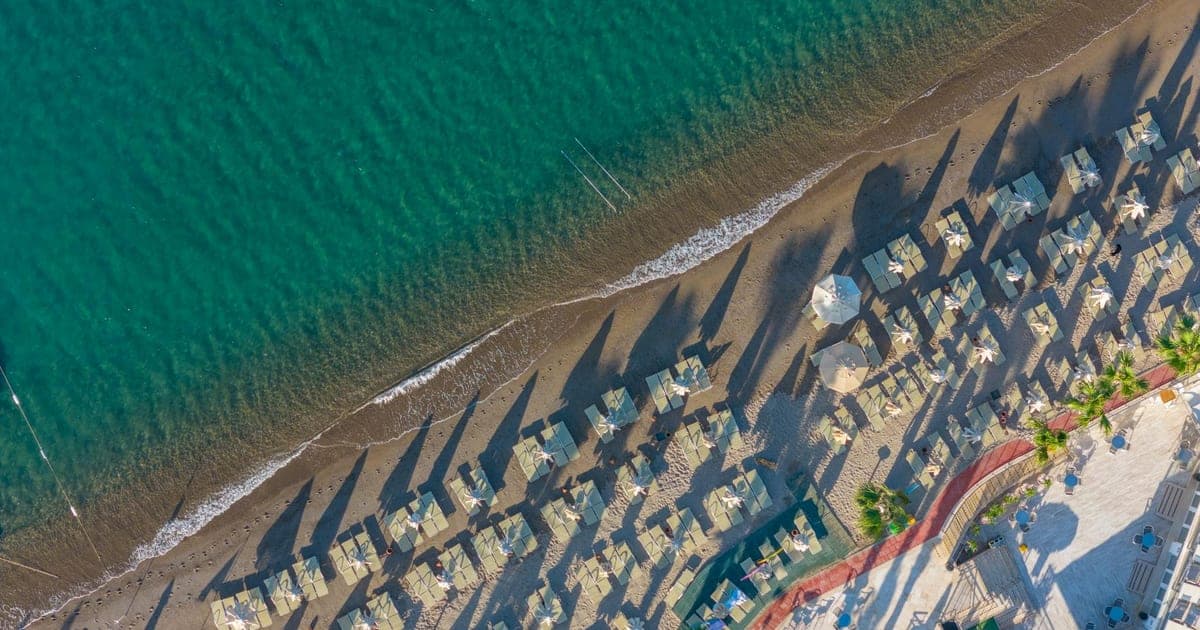
In most Puglia itineraries, Salento is the tail end: you arrive on day four, you see Lecce, you do one beach, you leave. A day and a half out of five.
If you came here looking for five days of Salento, that is a different holiday. And it has one rule the generic itineraries leave out, because it means not deciding everything before you go.
Two coasts, forty minutes apart
Salento is a narrow peninsula with sea on both sides, and they are two different seas.
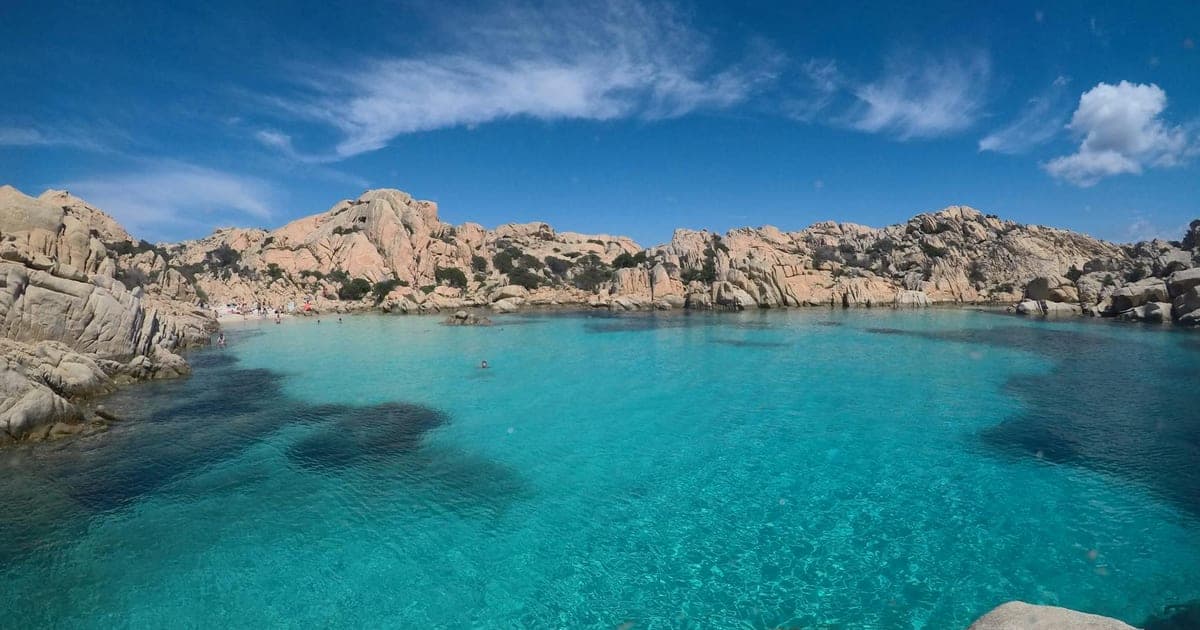
To the west, the Ionian: Gallipoli, Porto Cesareo, Pescoluse. Sand, shallow water, the sunset over the sea. To the east, the Adriatic: Otranto, Torre dell'Orso, the Alimini lakes, and further south rock, cliffs and small coves.
How far apart? From Lecce it is 13 km to the Adriatic and 28 km to the Ionian. Lecce to Gallipoli is about 39 km and thirty-six minutes; Lecce to Otranto about 46 km and forty minutes.
Which is to say: the two coasts are closer to each other than most people's commute.
Sleep in Lecce for the geometry, not the baroque
The baroque is an excellent reason. It is not the reason.
Those 13 and 28 kilometres are: Lecce is the only base from which you can still choose, in the morning, which sea you want. From Gallipoli you are on the Ionian and you stay there. From Otranto you are on the Adriatic and you stay there. From Lecce you have both within reach, plus a real city around you when the sun goes down.
It also has a beach of its own: San Cataldo, 11 km from the centre.
The choice gets made in the morning, by the wind
This is the thing everyone who lives within thirty kilometres knows how to do, and almost no guide puts up front: when one sea is rough, the other is usually calm. The wind decides which.
The rule, in two lines:
- Wind from the north or east — tramontana, grecale, levante → go Ionian. Adriatic choppy, western side calm.
- Wind from the south or west — scirocco, libeccio → go Adriatic, particularly the stretch from Lecce down to Otranto. The Ionian gets stirred up.
A westerly is rare in summer. There are also sheltered coves that hold up against the wrong wind — the Alimini, the Ciolo, the stretch between Punta Pizzo and Punta della Suina — but those are the exception, not the plan.
How you actually use it: the night before, you check the wind forecast rather than the sun. In the morning you pick the coast. It is the only reason this itinerary keeps its days slightly open instead of locking every beach in advance.
Here you really do need a car
On our Bari and around page the conclusion was the opposite: up there you can do the whole thing by train. Not in Salento, and one number says why.
Lecce to Otranto by car: about forty minutes. By train: there is no direct service — you go via Maglie, and with the change it comes to roughly two and a half hours.
The Salento rail network connects the towns, not the marine hamlets. And the marine hamlets are why you came. Take the car.
Five days, one base
Day 1 — Lecce. Piazza del Duomo, Santa Croce, the local stone that turns orange at sunset. Rustico and pasticciotto, not one or the other. It needs a full day: this is the city that gives you the context for everything else.
Day 2 — Ionian coast. Gallipoli: the old town on its island, the harbour, and the beaches south towards Punta della Suina. Sand and shallow water.
Day 3 — Adriatic coast. Otranto: the cathedral mosaic, the castle, the old town. Then north towards Torre dell'Orso and the Alimini, or south along the high rocky coast.
Day 4 — The tip. Santa Maria di Leuca, where the peninsula ends and the two seas meet. The coast between Leuca and Otranto is the rockiest and least crowded stretch in all of Salento.
Day 5 — Whichever coast the wind says, then fly. This day is left open on purpose. Check the forecast, take the calm side, and finish on the better of the two beaches instead of the one you booked three months ago.
When to go
Salento in August is among the most crowded places in Italy, and the price lists know it. We explained how the season bands work — and why the dates always fall on a Saturday — here: High and low season 2026.
The short version for Salento: the first half of June, and September after the first week. Warm sea, rates back down, and the provincial roads behaving like roads again rather than queues.
You have the five days, you are missing the plan. Give us your dates and where you are starting, and we will build the days out one by one — free, no account, about thirty seconds.
Frequently asked questions
What is there to see in Salento in 5 days? Lecce, the Ionian coast around Gallipoli, the Adriatic coast around Otranto, the tip at Santa Maria di Leuca, and a fifth day left open to go back to whichever coast the wind has made calm. All from a fixed base in Lecce.
Where should you stay in Salento? Lecce, if you want to choose your sea each morning: 13 km to the Adriatic, 28 to the Ionian. If you only care about one coast and want the beach downstairs, sleep on the water and give up the flexibility.
How do you pick a beach based on the wind? With wind from the north or east — tramontana, grecale, levante — the Ionian is usually calm. With wind from the south or west — scirocco, libeccio — the Adriatic is calm, especially between Lecce and Otranto. Check the wind forecast the night before.
Do you need a car in Salento? Yes. Trains connect the towns, not the coastal hamlets, and Lecce to Otranto has no direct service: you change at Maglie and it takes about two and a half hours, against forty minutes by car.
Can you do Salento from Bari? Not as a day trip: Otranto and Gallipoli are over three hours each way by train from Bari. If you land in Bari and Salento is the point, come south and sleep here.
Ionian or Adriatic coast — which is better? It is not a contest: the Ionian is sand and shallow water, the Adriatic is rockier with coves. The real criterion is not taste but the wind that day, which is exactly why it pays to be able to reach both.
Sources
- Guide to the winds of Salento — which coast for which wind and Leccenews24 — two independent sources agreeing: tramontana, grecale and levante leave the Ionian calm; scirocco and libeccio leave the Adriatic calm
- Salento — geographic definition — all of Lecce province, most of Brindisi excluding Fasano, Ostuni and Cisternino, and the southeast of Taranto province
- Road distances Lecce–Gallipoli (~39 km, ~36 min), Lecce–Otranto (~46 km, ~40 min) and Lecce–San Cataldo (11 km), checked against routing calculators in August 2026
- Lecce–Otranto by train — no direct service, change at Maglie, around 2h26 in total
- Driving times are indicative and Salento's provincial roads are considerably slower in August. Sea conditions should be checked against the day's wind forecast.