Seoul is one of the fastest-rising travel destinations for 2026, and the reasons are more concrete than hype. K-beauty "glow-cations" — trips built around skincare clinics and beauty shopping — are driving a new wave of visitors. And the city serves arguably the world's best street food, from Gwangjang Market's mung bean pancakes to 2 AM convenience store ramen eaten on a plastic stool. The numbers back this up: South Korea saw a 47% increase in international arrivals in 2025, with Seoul accounting for the majority.
But Seoul is also a city that rewards preparation. The subway is exceptional — cheap, punctual, English-friendly — but only if you load a T-money card. Kakao Map outperforms Google Maps for local navigation. And the DMZ day trip requires advance booking or you'll spend your morning in a queue that goes nowhere. This guide handles all of it.
Before You Go: The Practical Stuff
Getting Around — Seoul's Subway & T-Money Card
Seoul's Metro is one of the best urban transit systems in the world. Nine color-coded lines cover the entire city and most major tourist areas. Trains run 5:30 AM to midnight, arrive every 2-5 minutes during the day, and are air-conditioned year-round.
T-money Card — Get one immediately. It's a rechargeable transit card that works on the subway, buses, and even taxis. Available at any convenience store (GS25, CU, 7-Eleven) for ₩2,500 ($1.85) plus your first load. Reload at convenience stores or subway machines.
- Single subway ride: ₩1,400-1,750 ($1.05-1.30) depending on distance
- T-money saves: ₩100 per subway ride and ₩100 per bus ride vs. single-use tickets
- Daily cap: No daily cap — but 5-7 rides per day is common, so budget ₩7,000-10,000 ($5.25-7.50) for transit
Kakao Map over Google Maps — Google Maps is unreliable for Seoul transit directions. Kakao Map (free, English-supported) gives accurate subway transfers, walking times, and real-time bus schedules. Download it before you land.
Airport to City Center:
From Incheon International Airport (ICN):
- AREX (Airport Railroad Express): Two options. The all-stop train takes 66 minutes to Seoul Station, ₩4,450 ($3.35). The express train takes 43 minutes to Seoul Station, ₩11,000 ($8.25). T-money works on both.
- Bus: ₩10,000-17,000 ($7.50-12.75) depending on destination. Good for hotels not near Seoul Station.
- Taxi: ₩65,000-90,000 ($48-67) to central Seoul. 60-90 minutes depending on traffic. Kakao Taxi is the app-based alternative to street taxis.
Budget Breakdown
| Expense | Budget | Mid-Range |
|---|---|---|
| Accommodation/night | ₩27,000-54,000 ($20-40) | ₩81,000-162,000 ($60-120) |
| Food/day | ₩4,000-8,000 ($3-6) street food | ₩20,000-34,000 ($15-25) restaurants |
| Transport/day | ₩5,600-8,400 ($4.20-6.30) subway | — |
| Activities/day | ₩1,000-5,000 ($0.75-3.75) | ₩15,000-50,000 ($11-37) |
| Daily Total | $30-55 | $80-130 |
Seoul is excellent value. A full meal of bibimbap or sundubu jjigae at a neighborhood restaurant costs ₩8,000-12,000 ($6-9). Korean BBQ per person at a proper restaurant runs ₩20,000-35,000 ($15-26). A subway ride is $1.05. Budget travelers who eat street food and stay in hostels can get by on $50/day comfortably.
Best Time to Visit
March-May (cherry blossom season): The best time to visit. Temperatures hit 10-20°C (50-68°F). Cherry blossoms peak in Seoul in late March to early April — Yeouido Park and Bukhansan are spectacular. Book accommodation months in advance for this window.
September-November (fall foliage): The second-best window. Temperatures drop to 8-18°C (46-64°F), the leaves turn across Bukhansan and Gyeongbokgung, and the crowds are lower than spring.
June-August: Hot and humid (28-35°C). Monsoon season runs July-August with heavy rain periods. Not ideal but manageable if you plan indoor activities during midday.
December-February: Cold, sometimes below freezing. Crowds are minimal and accommodation rates drop. Han River freezes in January. Great for ski day trips (Phoenix Park or Vivaldi Park, 90 minutes from Seoul).
Day 1: Gyeongbokgung Palace, Bukchon Hanok Village & Gwangjang Market
Morning: Gyeongbokgung Palace (9:00 AM)
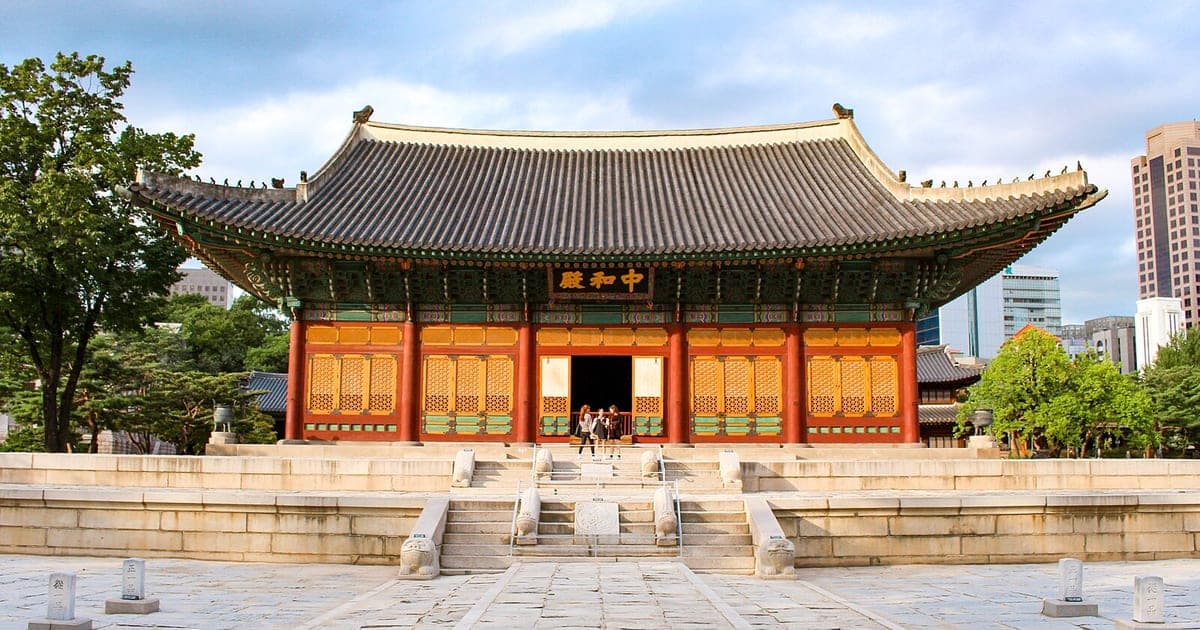
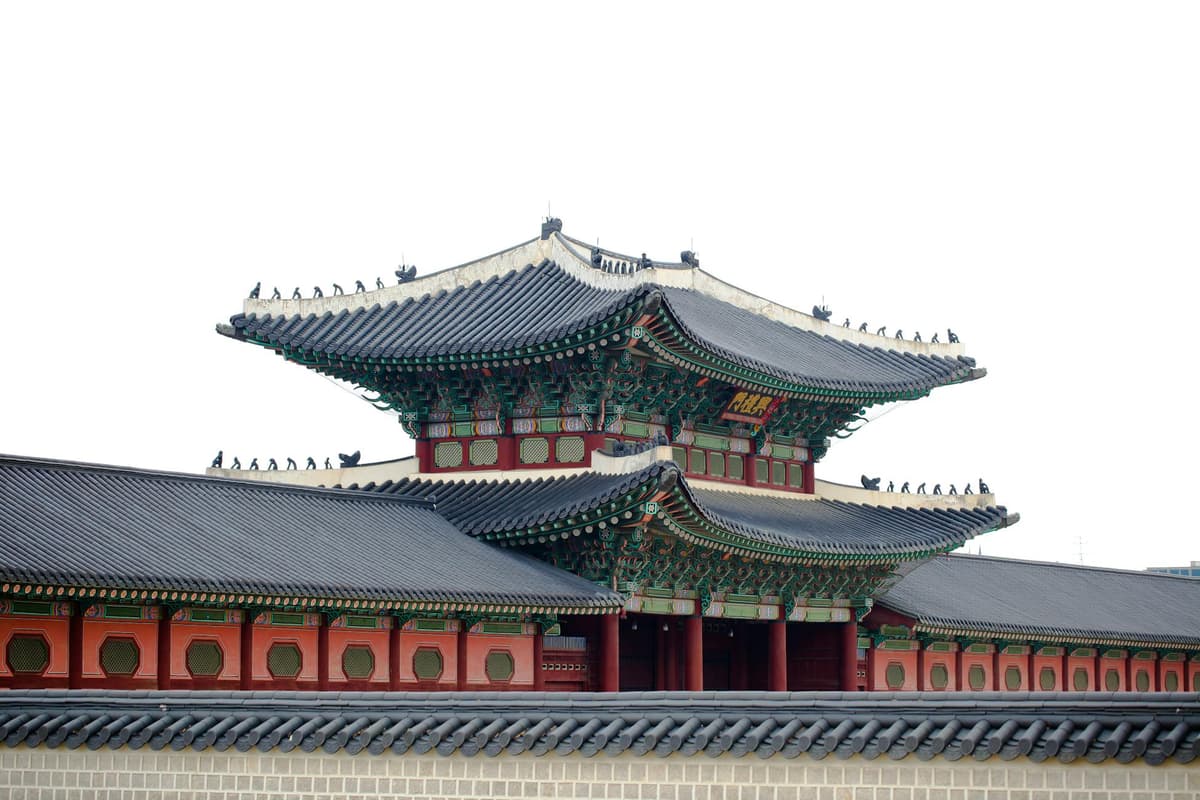
Start your Seoul trip with the city's most iconic landmark. Gyeongbokgung ("Palace Greatly Blessed by Heaven") was built in 1395 as the primary royal palace of the Joseon Dynasty. The scale is stunning — 60 buildings across 410,000 square meters, flanked by Bukhansan mountain to the north.
- Entry: ₩3,000 ($2.25). One of the best value tourist attractions in any Asian capital.
- Hours: 9:00 AM - 6:00 PM (March-October), 9:00 AM - 5:00 PM (November-February). Closed Tuesdays.
- Changing of the Guard ceremony: 10:00 AM and 2:00 PM at Gwanghwamun Gate. Free to watch, takes about 20 minutes. Colorful traditional uniforms and drumming.
- Hanbok rental: Dozens of shops near the palace gate rent traditional Korean dress (hanbok) for ₩15,000-30,000 ($11-22) for 2-3 hours. Entry to the palace is free with hanbok. It sounds touristy — it's genuinely fun.
- Getting there: Subway Line 3, Gyeongbokgung Station, Exit 5. 3-minute walk.
Inside, visit the National Palace Museum of Korea (free) for context on the Joseon Dynasty, and walk to Gyeonghoeru Pavilion — a floating banquet hall on a rectangular pond that is one of the most photographed spots in Korea.
Late Morning: Bukchon Hanok Village (11:00 AM)
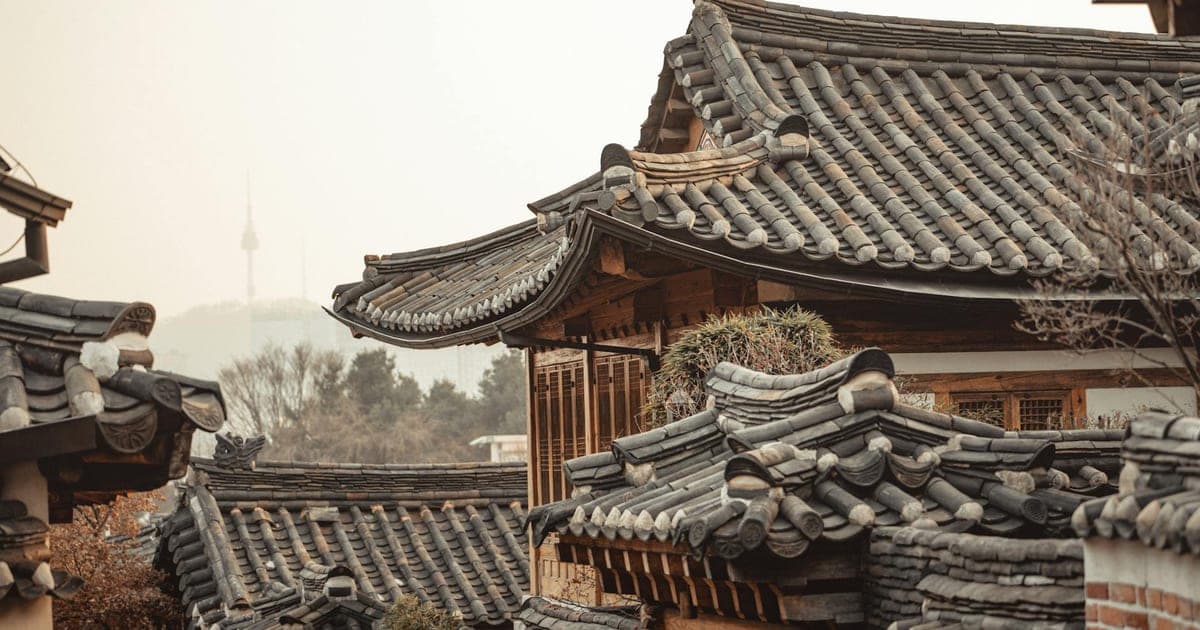
A 15-minute walk east of the palace brings you to Bukchon Hanok Village — a residential neighborhood of 900+ traditional Korean houses (hanok) preserved between Gyeongbokgung and Changdeokgung palaces. This is where Seoul's old aristocracy lived.
- Entry: Free. It's a living neighborhood — people actually live here.
- Etiquette: Walk quietly. Noise restrictions are posted (residents have complained about tourism impact). Don't enter private courtyards or photograph residents.
- Best photo spots: Bukchon 8 View (the famous long stairway with hanok rooflines descending toward the city). Arrive before 11:00 AM for fewer crowds.
- Time needed: 45-60 minutes of walking. Wear comfortable shoes — it's hilly.
Lunch: Insadong (12:30 PM)
Walk 10 minutes south to Insadong, Seoul's traditional arts and antiques district. The pedestrianized main street is lined with tea houses, craft shops, and galleries.
Where to eat:
- Ssamziegil courtyard (inside the Insadong alley): Food stalls selling hotteok (sweet pancakes filled with brown sugar and nuts, ₩2,000/$1.50), ddukbokki (spicy rice cakes, ₩4,000/$3), and tornado potatoes (₩3,000/$2.25).
- Insadong Teahouse culture: Try barley tea (보리차, boricha) or traditional Korean tea at any of the hanok tea houses. Most charge ₩5,000-8,000 ($3.75-6) per pot.
- Gogung (in Insadong main alley): Proper sit-down bibimbap from Jeonju, Korea's culinary capital. ₩10,000-14,000 ($7.50-10.50).
Evening: Gwangjang Market (6:00 PM)
Gwangjang Market is Seoul's oldest permanent market (established 1905) and its most atmospheric food destination. The covered indoor market transforms at dinner time, with hundreds of pojangmacha (street food stalls) running down the center hall.
What to eat:
- Bindaetteok (mung bean pancakes): ₩5,000-8,000 ($3.75-6) for a generous serving. The most famous item. Crispy outside, soft and savory inside. Order with makgeolli (Korean rice wine).
- Mayak gimbap (addiction rice rolls): ₩3,000-5,000 ($2.25-3.75). Tiny rolls of rice, sesame, and vegetables. You'll eat 12 of them.
- Yukhoe (Korean beef tartare): ₩10,000-15,000 ($7.50-11.25). Fresh, seasoned raw beef with a raw egg yolk. Better than it sounds.
- Tteokgalbi (grilled short rib patties): ₩5,000 ($3.75).
Makgeolli — cloudy, slightly sweet rice wine at 6-8% ABV — pairs perfectly with bindaetteok. A 1-liter pot costs ₩5,000-8,000 ($3.75-6).
Getting there: Subway Line 1, Jongno 5-ga Station, Exit 8. 2-minute walk.
Day 2: Myeongdong K-Beauty, Namsan Tower & Itaewon
Morning: Myeongdong K-Beauty Shopping (10:00 AM)
Myeongdong is Seoul's commercial center and the global headquarters of K-beauty retail. Every Korean cosmetics brand has a flagship store here: Innisfree, The Face Shop, Cosrx, Some By Mi, Laneige, Sulwhasoo, Etude House, Missha, and dozens more.
Why shop here vs. duty-free or online:
- Prices are 20-40% cheaper than international markets
- Testers available for everything — you can try before you buy
- Staff are knowledgeable and will guide you based on your skin concerns
- Sheet mask packs cost ₩1,000-2,000 ($0.75-1.50) each vs. $3-8 abroad
Getting there: Subway Line 4, Myeongdong Station, Exit 6. 2-minute walk.
K-Beauty essentials to buy:
- Snail mucin serum (COSRX is the benchmark): ₩15,000-25,000 ($11-18.75)
- Sunscreen (Korean SPF formulations are lighter than Western equivalents): ₩12,000-20,000 ($9-15)
- Sheet mask multi-packs: ₩10,000-20,000 ($7.50-15) for 10-pack
- Cushion foundation: ₩20,000-35,000 ($15-26)
- Ampoules and serums: ₩15,000-50,000 ($11-37) depending on brand
Myeongdong street food while you shop: The pedestrian streets outside the stores are lined with street food vendors. Best options: lobster grilled cheese (₩7,000/$5.25), mini hotteok (₩1,500/$1.10), corn dogs with various coatings (₩3,000-5,000/$2.25-3.75), and freshly made churros.
Afternoon: Namsan Tower (2:00 PM)
N Seoul Tower (Namsan Tower) sits atop Namsan Mountain, 237 meters above sea level. The observation deck offers 360-degree views of the entire Seoul basin — on clear days you can see all the way to Incheon.
- Entry: ₩21,000 ($15.75) for observation deck. Or take the cable car up and walk for free on the mountain.
- Cable car: ₩15,000 ($11.25) round trip. Or hike up in 25-30 minutes from Myeongdong (free).
- Hours: 10:00 AM - 10:00 PM (Sunday-Thursday), 10:00 AM - 11:00 PM (Friday-Saturday)
- Best time: Late afternoon for golden hour views
Love locks: The fences around the tower are covered in thousands of padlocks left by couples. The tradition is slightly less romantic once you learn the locks are removed every few years and recycled.
Evening: Itaewon (7:00 PM)
Itaewon is Seoul's most international neighborhood — historically home to the US military base community and now a cosmopolitan mix of Korean, international, and LGBTQ+ bars and restaurants. It's also where you'll find the best non-Korean food in the city.
- Getting there: Subway Line 6, Itaewon Station, Exit 1.
- Useful if: You've had enough Korean food and want sushi, Vietnamese, Lebanese, or a craft cocktail bar.
- Nightlife: Itaewon Hill (uphill from the main strip) is the main bar area, open until 3-5 AM. Less touristy than Hongdae, more mixed crowd.
- What to eat: Passion 5 bakery (for pastries), Vatos (Korean-Mexican fusion, ₩15,000-25,000/$11-18.75 per person), or browse the Haebangchon (HBC) neighborhood nearby for neighborhood Korean restaurants.
Day 3: Gangnam, COEX Starfield Library & Korean BBQ
Morning: Gangnam & Starfield Library (10:00 AM)
Yes, Gangnam ("south of the river") is that district — the one that made PSY famous in 2012 and has been a shorthand for wealth ever since. The reality is slightly more nuanced: it's genuinely Seoul's most affluent district, with glass towers, luxury retail, and the highest concentration of plastic surgery clinics in the world. But it's also interesting to visit precisely because it's so different from the old-city neighborhoods of Day 1.
Getting there: Subway Line 2, Gangnam Station, or Line 9, Bongeunsa Station.
COEX Mall and Starfield Library:
COEX is an underground mega-mall connected to the Bongeunsa subway station. It's massive — 496,000 square meters of retail, restaurants, and attractions. You could spend half a day here and not see everything.
Inside COEX, the Starfield Library is the most photographed interior in Seoul: a two-story atrium lined floor-to-ceiling with 50,000 books, illuminated shelves, and reading chairs. Entry is free. It's open to anyone. The photos do not exaggerate how striking it is.
- Starfield Library: Free entry. Inside COEX, Bongeunsa entrance. Open 10:30 AM - 10:00 PM.
- Aquarium: ₩33,000 ($24.75). Skip unless you're traveling with children.
- CGV Megabox cinema: If you're a movie fan, catching a Korean film in 4DX or IMAX is a legitimate experience. Tickets ₩13,000-28,000 ($9.75-21).
Afternoon: Garosu-gil (2:00 PM)
Walk or take a short taxi to Garosu-gil ("tree-lined road") — a 700-meter tree-lined boulevard in Sinsa-dong that functions as Seoul's version of a boutique shopping street. Less crowded than Myeongdong, more local, better coffee.
What to do:
- Wander the side streets (doeks) off the main boulevard for independent boutiques and concept stores
- Café culture: Seoul has an extraordinary coffee scene. A specialty pour-over costs ₩6,000-9,000 ($4.50-6.75). Try Miel, Fritz Coffee, or any of the concept cafes with architectural interiors.
- Boon The Shop (Apgujeong): If you're interested in high-end Korean fashion, this is the destination.
Evening: Korean BBQ Dinner (7:00 PM)
Tonight is the non-negotiable Korean BBQ experience. Not at a tourist-friendly place — at a proper local restaurant.
How Korean BBQ works: You receive a charcoal or gas grill set into the table. Meat arrives raw and you grill it yourself — or the server grills it for you at higher-end restaurants. You eat the grilled meat wrapped in lettuce leaves with garlic, gochujang (fermented chili paste), and banchan (small side dishes that come free with every meal).
What to order:
- Samgyeopsal (thick pork belly): ₩15,000-20,000 ($11-15) per portion. The Korean BBQ classic.
- Chadolbaegi (thinly shaved beef brisket): ₩15,000-25,000 ($11-18.75) per portion. Cooks in seconds, fatty and delicious.
- Galbi (marinated short ribs): ₩25,000-40,000 ($18.75-30) per portion. More expensive but worth trying once.
- Doenjang jjigae (fermented soybean paste stew): ₩3,000-6,000 ($2.25-4.50). The classic BBQ side dish.
Budget: A full Korean BBQ meal with 2-3 meat portions, drinks, and banchan typically costs ₩30,000-50,000 ($22.50-37.50) per person.
Recommended restaurants near Gangnam:
- Maple Tree House (Itaewon/Gangnam branches): High-quality wagyu-influenced Korean BBQ. ₩40,000-70,000 ($30-52) per person.
- Palsaik Samgyeopsal (multiple locations): Eight-flavor pork belly — same cut marinated in eight different sauces (ginseng, curry, wine, etc.). ₩16,000 ($12) per portion. Fun and accessible for first-timers.
- Any neighborhood open-flame spot in Mapo-gu or Mapo-gu/Mapo near Hongdae: ₩12,000-18,000 ($9-13.50) per portion. Cheaper, louder, and equally delicious.
Day 4: DMZ Day Trip
The Demilitarized Zone is one of the most sobering travel experiences available to anyone, anywhere. The 4-km-wide, 250-km-long buffer zone between North and South Korea has been frozen since the 1953 armistice — and it offers a genuinely unique window into 70+ years of geopolitical division.
The honest caveat: The DMZ is heavily managed, and what you can see depends entirely on the security situation on any given day. North Korea occasionally restricts access to the JSA (Joint Security Area). Have a backup plan.
Booking Your DMZ Tour
The DMZ is 55 km north of Seoul but cannot be visited independently. You must join an authorized tour group, and certain areas (especially the JSA) require advance permits that can take days to process.
Recommended approach:
- Book a full-day tour (9 AM - 6 PM) through a licensed operator: USO (US military-organized, open to all nationalities), Panmunjom Travel Center, or one of dozens of operators bookable via Klook or Viator.
- Cost: ₩90,000-150,000 ($67.50-112.50) for a full-day tour including JSA access and key sites. Tours including JSA are more expensive than those without.
- Book at least 5-7 days in advance. JSA access requires passport registration.
- Dress code for JSA: No torn jeans, no shorts, no sleeveless shirts, no military-style clothing, no overly casual attire. They will turn you away.
What You'll See
Joint Security Area (JSA) / Panmunjom: The only point where North and South Korean soldiers stand face-to-face. You'll enter the blue UN buildings that straddle the Military Demarcation Line — meaning you will technically step into North Korean territory for about 30 seconds. Korean People's Army soldiers stand statuelike outside. It's surreal.
Freedom Bridge: A 2001 bridge over the Imjin River, built for the return of South Korean POWs. Now a memorial site where visitors can look north over the river. The adjacent Imjin River area has a striking stillness.
Dorasan Station: The last railway station before North Korea — a fully functional, modern train station that has had no trains running north since 2008. The departure board shows "Pyongyang" as a destination. The symbolic power of the place — infrastructure for a connection that doesn't exist — is hard to shake.
3rd Infiltration Tunnel: One of four tunnels discovered that North Korea dug under the DMZ for a potential military incursion. You can walk down into the tunnel (about 500m, low ceilings, helmets provided). Entry ₩1,000 ($0.75).
Dora Observatory: Binoculars to see into North Korea. On clear days you can see Kaesong (a North Korean city), propaganda villages, and the world's second-tallest flagpole (160 meters) flying the DPRK flag.
Getting there independently (without tour): Technically possible to reach the DMZ entrance by subway (Line 1 to Dorasan Station area) and local bus, but access to JSA and key sites still requires a tour. Most travelers find a tour the practical option.
Day 5: Hongdae, Han River & Jjimjilbang
Morning: Hongdae Street Performances & Vintage Shopping (10:00 AM)
Hongdae (short for Hongik University area) is Seoul's arts, youth, and nightlife district — the neighborhood that shaped K-indie music, street art, and underground fashion. By day, it's a pleasant mix of vintage clothing shops, independent cafes, and art installation spaces.
Getting there: Subway Line 2, Hongik University Station, Exit 9.
What to do in Hongdae:
- Vintage shopping: Hongdae has the densest concentration of secondhand and vintage clothing shops in Seoul. Look for Gyeongui Line Forest Park Street (연남동) nearby for a broader cluster of independent shops.
- Street performances (버스킹, busking): K-pop dance crews, singer-songwriters, and comedy acts perform along the main pedestrian plaza and park, especially on weekends from noon onward.
- Sangsang Madang: A design and culture complex (café, gallery, cinema). Free to browse the exhibition floors.
- Coffee and cafes: The neighborhood's café scene is inventive — art galleries that serve coffee, plant shops with espresso bars, retro-themed interiors. Budget ₩5,000-8,000 ($3.75-6) for a drink.
Lunch in Hongdae: The area around Yonsei University (5 minutes from Hongdae) has cheap, excellent student-neighborhood restaurants. Dak-galbi (spicy stir-fried chicken with rice cakes, ₩10,000-14,000/$7.50-10.50) and sundubu jjigae (soft tofu stew, ₩8,000-12,000/$6-9) are local staples.
Afternoon: Han River Bike Ride (2:00 PM)
The Han River flows east-west through central Seoul, flanked by 12 citizen parks that Seoulites use intensively for recreation. Renting a bike and cycling along the river path is one of the best free experiences in the city.
Bike rental:
- Seoul Bike (따릉이, Ddareungi): The city's public bicycle-sharing system. ₩1,000 ($0.75) for 1 hour, ₩2,000 ($1.50) for 2 hours. Download the Seoul Bike app and register with a credit card. Stations throughout the city.
- Private rental near Yeouido Hangang Park: ₩3,000-6,000 ($2.25-4.50) per hour for higher-quality bikes.
Best cycling route: From Yeouido Hangang Park east toward Banpo Bridge. The Banpo Rainbow Fountain runs at set times (check schedule at the bridge) and shoots colored water 20 meters into the river. The cycling path is flat, well-maintained, and separated from traffic.
Yeouido Hangang Park convenience stores: This is a famous Seoul experience — buying fried chicken, chips, and canned beer from the 7-Eleven or GS25 inside the park, and eating on a rented inflatable mattress (yes, they rent these) by the river. ₩15,000-25,000 ($11-18.75) total for food and drinks.
Evening: Jjimjilbang (Korean Spa) — The Perfect Final Night (7:00 PM)
A jjimjilbang (찜질방) is a Korean public bathhouse and sauna complex. It's one of the most distinctive local experiences in Seoul, and an ideal way to spend your final evening — cheap, relaxing, and entirely authentic.
How it works:
- Pay entry at the front desk: ₩10,000-15,000 ($7.50-11.25).
- You receive a locker key and a set of shorts and a t-shirt.
- Separate-sex bathing areas have multiple hot tubs, cold plunge pools, and individual showers. Swimwear not worn here — you go in without.
- Sauna rooms — varying temperatures from 45°C to 90°C — are mixed-gender and where you wear the provided clothing.
- Common areas have sleeping mats, TV rooms, a snack bar, and sometimes a restaurant. Many people sleep here overnight (budget accommodation option).
Recommended jjimjilbangs:
- Siloam Sauna (시로암사우나) near Seoul Station: Open 24 hours. No frills, local crowd, very clean. ₩12,000 ($9).
- Dragon Hill Spa (용산 드래곤힐스파): The biggest and most famous. 7 floors with indoor/outdoor pools, multiple saunas, restaurant, and an outdoor terrace. ₩18,000 ($13.50) on weekdays. Near Yongsan Station.
- Sparex Jjimjilbang (various locations): Modern facilities with English-friendly signage.
Snacks to try inside: Sikhye (sweet rice punch, ₩1,500/$1.10), boiled eggs (₩1,000/$0.75 each — a jjimjilbang tradition), and ice cream bars.
K-Beauty Glow-Cation: Seoul's Medical Tourism Scene
Seoul's K-beauty tourism goes well beyond sheet masks. South Korea is one of the world's top medical tourism destinations, with Gangnam and Apgujeong housing hundreds of clinics offering everything from basic facials to advanced skin treatments at significantly lower prices than the US or Europe.
Why Seoul for skin treatments:
- South Korean dermatology standards are genuinely high — the country is a global leader in skin research
- Prices are 40-70% cheaper than comparable treatments in Western countries
- Many clinics have English-speaking staff and dedicated foreign patient coordinators
- No stigma — Korean culture is openly pro-skincare and pro-aesthetic treatment
Popular treatments and typical costs (2026):
| Treatment | Seoul Cost | Estimated US/Europe Cost |
|---|---|---|
| HydraFacial / aqua peel facial | ₩67,000-135,000 ($50-100) | $150-250 |
| LED light therapy session | ₩40,000-80,000 ($30-60) | $75-150 |
| Skin booster injections (Juvederm/Rejuran) | ₩135,000-270,000 ($100-200) | $400-800 |
| Laser toning (pigmentation) | ₩100,000-200,000 ($75-150) | $300-600 |
| Microneedling (RF) | ₩135,000-270,000 ($100-200) | $400-700 |
| Botox (per area) | ₩80,000-150,000 ($60-112) | $250-500 |
Recommended clinic areas:
- Gangnam-gu: The highest concentration. Brands like Banobagi, ID Hospital, JK Plastic Surgery, and View Plastic Surgery are internationally known.
- Apgujeong-dong: Premium clinics with English-fluent staff. Good for first-timers unfamiliar with the process.
Practical tips for clinic visits:
- Book consultations at least 2-3 days in advance online
- Ask specifically about downtime — some treatments (laser resurfacing, deeper peels) leave redness for 3-5 days
- Confirm the physician's qualifications and that the clinic is registered with the Korean Health Insurance Review and Assessment Service
- Medical tourism facilitators like GL Med or Shin Medical can arrange transport, translation, and appointments
Use MonkeyTravel's free AI trip planner to work clinic appointments into your itinerary without double-booking.
How Much Does 5 Days in Seoul Cost?
Realistic per-person budget for 5 days, including the DMZ day trip:
| Category | Budget | Mid-Range |
|---|---|---|
| Accommodation (5 nights) | $100-200 | $300-600 |
| Food (5 days) | $50-80 | $100-175 |
| Transport (subway + AREX) | $30-45 | $30-45 |
| DMZ tour | $75-112 | $75-112 |
| Activities & entries | $20-40 | $50-100 |
| Shopping & K-beauty | Variable | Variable |
| Total (ex-shopping) | $275-477 | $555-1,032 |
Money-saving tips:
- Eat at least one meal per day from a convenience store (CU, GS25, 7-Eleven) — Korean convenience store food (cup ramen, gimbap, egg salad sandwiches, onigiri) is surprisingly good and costs ₩3,000-6,000 ($2.25-4.50)
- The T-money card discount adds up — use transit for everything
- Book DMZ tours directly with operators rather than through hotel desks — same product, 15-20% cheaper
- Free attractions are excellent: Gyeongbokgung grounds, Bukchon, Insadong, Cheonggyecheon Stream, Han River parks, Dongdaemun Design Plaza (exterior)
- Korean lunch set menus (점심특선, jeomshim teukseon) at sit-down restaurants are typically ₩8,000-13,000 ($6-9.75) and include soup, rice, and banchan
Let AI Plan Your Personalized Seoul Itinerary
This guide gives you a framework. But your Seoul might look very different — maybe you want to add a day trip to Suwon Hwaseong Fortress or the DMZ on a different day, or go deeper into the K-beauty clinic experience, or spend more time in Hongdae's bar scene.
MonkeyTravel's AI trip planner builds a personalized Seoul itinerary in 30 seconds — with real restaurants, actual subway directions, and K-beauty clinic timing factored in. It's free, and it handles the routing logic that makes Seoul easy to navigate.
Also worth reading: What to know before your first trip to Japan, Seoul destination guide, and best food destinations for 2026.
This itinerary is a starting point, not a script. If you want one built around your own dates, budget and pace — with real venues and opening hours — MonkeyTravel does it in about thirty seconds, free and with no account.
FAQ
Is 5 days enough for Seoul?
Five days is solid for a first visit. You'll cover the major historical sites, at least one full K-beauty shopping day, a DMZ trip, Gangnam, and Hongdae. For travelers who want to add day trips to Suwon, Nami Island, or the Korean countryside, budget 7-8 days total. If your primary goal is K-beauty clinic treatments with recovery time, plan for 7-10 days.
What is the best area to stay in Seoul?
Myeongdong is the most tourist-friendly — walking distance to Namsan Tower, Gwangjang Market is one subway stop, and it's a Line 4 hub. Hongdae is great for nightlife and younger travelers — direct AREX connection to the airport makes arrivals and departures simple. Insadong/Jongno puts you closest to the palaces and traditional neighborhoods. All three areas have hostels ($20-40/night) and mid-range hotels ($60-120/night).
Do I need to speak Korean to navigate Seoul?
No. Seoul's subway system has full English signage, and most tourist areas have English menus. The Kakao Map app handles navigation well. Where language can be a barrier: neighborhood restaurants outside tourist zones (point at photos or use Google Translate's camera function), and clinics (bring a translation app or use a facilitator service).
Is the DMZ worth visiting from Seoul?
Yes, but go in with accurate expectations. It's not an adventure tour — it's a somber, carefully managed experience. The JSA specifically is genuinely affecting. If you have a limited itinerary and must cut something, skip the DMZ before cutting something like Gyeongbokgung or the Han River. But if you have the day, it's unlike anything else available to tourists anywhere.
When is the best time to visit Seoul for cherry blossoms?
Late March to early April. Seoul's cherry blossoms peak when the 5-day average temperature consistently hits 10°C (50°F), which typically falls in the last week of March through first week of April. Yeouido Park's "cherry blossom road" is the most famous spot. Hike Bugaksan or Namsan for blossoms with a city backdrop. Book accommodation 3-4 months in advance for this window — hotels fill up fast.
Sources: Korea Tourism Organization, Seoul Metro, T-money Card, Kakao Map, USO Korea DMZ Tours, Panmunjom Travel Center, Gyeongbokgung Palace, Korea Health Industry Development Institute — Medical Tourism, Starfield Library COEX