Lunar New Year 2027 falls on Saturday 6 February, with New Year's Eve on Friday 5 February and the Lantern Festival on Saturday 20 February. The Hong Kong Observatory calls it the Ding-wei year of the Goat. Korea's official calendar puts Seollal a day later, on Sunday 7 February.
Below are 13 places, eight in Asia and five beyond, each with confirmed 2027 dates (or 2026 dates where 2027 is not out), February weather from national weather services and an honest downside. Every date was read on an organiser's or government's own page on 4 October 2026; where only press coverage exists, we name the outlet.
The other half is when not to go. China's travel rush, Hong Kong's mainland Golden Week and the week-long breaks in Taiwan and Vietnam all cluster around New Year's Day. For calmer options, see where to go in February.
Lunar New Year 2027 dates at a glance
- New Year's Eve: Friday 5 February. New Year's Day: Saturday 6 February. Lantern Festival: Saturday 20 February.
- South Korea: Seollal on Sunday 7 February; holiday from Saturday 6 to Tuesday 9 February.
- Hong Kong: holidays on 6, 8 and 9 February, a four-day break.
- Singapore: 6–7 February, with Monday 8 February in lieu.
- Malaysia: 6–7 February in every state.
- Taiwan: seven days off, 4–10 February.
- Vietnam: seven-day public-sector Tết break, 4–10 February.
- Mainland China: not published on 4 October 2026; the 2026 break ran nine days.
Lunar New Year 2027 destinations compared
| Destination | Why then | Key 2026/27 date(s) | February weather | Cost / vibe |
|---|---|---|---|---|
| Hong Kong | Parade, fireworks, race day | Race meeting Mon 8 Feb 2027 | 15–19°C (60–67°F) | Free on the street; seats HK$450–600 (2026) |
| Singapore | Light-up, River Hongbao, Chingay | Holidays 6–8 Feb 2027 | 25–32°C (76–89°F) | Mostly free; Chingay S$20–60 (2026) |
| Taipei and Miaoli | Lantern festivals | Taiwan Lantern Festival 20 Feb–7 Mar 2027 (tentative) | 14–20°C (58–69°F) | Book trains early |
| Penang | Kek Lok Si light-up | Lights on 13 Feb in 2026 | 24–32°C (75–90°F) | Temple-centred |
| Bangkok | Yaowarat festival | Until 1 Mar in 2026 | 23–33°C (74–91°F) | Street food |
| Hội An | Tết programme | Tết Sat 6 Feb 2027 | 20–26°C (69–79°F) | Family holiday |
| Seoul | Seollal, palaces | Seollal Sun 7 Feb 2027 | −3 to 5°C (26–41°F) | Cold, cultural |
| Beijing | Temple fairs | Days 1–7 in 2026 | −7 to 4°C (20–39°F) | Peak domestic travel |
| London | Chinatown parade, stage | Sun 7 Feb 2027 | 3–9°C (37–48°F) | Free, crowded |
| Paris | 13th arrondissement parade | 1 Mar in 2026 | 3–9°C (38–48°F) | Huge crowds |
| New York | Firecrackers, parade | Sat 6 and Sun 21 Feb 2027 | −1 to 6°C (30–42°F) | Two events, cold |
| San Francisco | Night parade | Sat 20 Feb 2027 | 9–16°C (48–60°F) | Free; paid bleachers |
| Sydney | Lanterns, dragon boats | 14 Feb–1 Mar in 2026 | 20–27°C (67–80°F) | Some free events |
In Asia
1. Hong Kong — fireworks, a night parade and a race day
Hong Kong packs its set pieces into the first three days. In 2026 the International Chinese New Year Night Parade left the Hong Kong Cultural Centre Piazza at 20:00 on the first night and wound along Canton, Haiphong and Nathan roads with 12 floats and 46 troupes; organisers expected 100,000 spectators, about half of them visitors (RTHK). The next night, 31,888 shells lit up Victoria Harbour for 23 minutes from 20:00. Before the holiday, 14 New Year fairs, including one in Victoria Park, ran until 07:00 on New Year's Day.
2027: the Jockey Club's fixtures show a Sha Tin day meeting on Monday 8 February, the third day of the year, the slot of the 2026 Lunar New Year race day. Parade and fireworks dates were not announced as of 4 October 2026.
Weather: 15.3–19.4°C (60–67°F) with 38.9 mm of rain in February (Hong Kong Observatory, 1991–2020).
Book: 2026 grandstand seats cost HK$450–600 (about €51–68), announced three weeks ahead; the pavements are free. Book any harbour-view room for fireworks night early.
The trade-off: the Immigration Department expected 1.43 million mainland visitors over the 2026 Golden Week (15–23 February), Tsim Sha Tsui roads start closing at 15:30 on parade day, and the Hong Kong Museum of Art shuts for the first two days of the year.
2. Singapore — lights, a river festival and Chingay
Singapore spreads the celebration over weeks, and most of it is free. In 2026 Chinatown's street light-up was switched on on 30 January (Time Out Singapore). River Hongbao, in its 40th edition, ran 15–24 February at Gardens by the Bay with free entry and fireworks at 20:00 on opening night, at midnight on New Year's Eve and at 21:00 on the first two days. Chingay followed on 27–28 February at the F1 Pit Building, with seats from S$20 to S$60, about €14–42 (Time Out).
2027: the public holidays are Saturday 6 and Sunday 7 February, with Monday 8 February in lieu (Ministry of Manpower). Chingay's site showed no 2027 dates on 4 October 2026.
Weather: February is the driest month and one of the sunniest, averaging 24.6–31.5°C (76–89°F) with 105.1 mm of rain (Meteorological Service Singapore, 1991–2020).
Book: 2026 Chingay tickets were on sale by 30 December, so watch chingay.gov.sg late in the year.
Eat: the Singapore Tourism Board points visitors to yu sheng, a raw-fish salad tossed high while wishes are called out, plus pineapple tarts and bak kwa.
The trade-off: the headline events spread over a month, so a short stay over 6–8 February catches the holiday but probably misses Chingay.
3. Taipei and Miaoli — lanterns on land and in the sky
Taiwan's lantern events cluster around the Lantern Festival. The national Taiwan Lantern Festival changes host county: Chiayi in 2026, Miaoli in 2027, with the lantern zone around HSR Miaoli Station and a tentative run from 20 February to 7 March (Central News Agency; Liberty Times). Taipei runs its own festival, which in 2026 lit up Ximending and Taipei Expo Park from 25 February to 15 March (TVBS). In Pingxi, New Taipei, the 2026 mass sky-lantern releases were on 27 February at Pingxi Junior High School and on 3 March, Lantern Festival day, at Shifen, with free release vouchers from 10:30.
2027: seven days off, 4–10 February, with 9 and 10 February as make-up days because the first two days of the year fall on a weekend (Directorate-General of Personnel Administration; ETtoday). Taipei and Pingxi dates were not announced as of 4 October 2026.
Weather: Taipei averages 14.4–20.3°C (58–69°F), with 143.2 mm of rain over about 13 days (Central Weather Administration, 1991–2020). Pack a rain shell.
Book: trains and rooms for the 4–10 February break first, then lantern nights from 20 February.
The trade-off: the lanterns come two to four weeks after New Year's Day and February is damp, so seeing both means a long stay or two trips.
4. Penang — Kek Lok Si by night
Kek Lok Si in Air Itam, which The Star calls the country's largest Buddhist temple, holds an annual lighting-up ceremony a few days before the new year. In 2026 it fell on Friday 13 February, with millions of LED lights and lanterns draped across its pagodas, halls and terraces. George Town's Penang Miaohui temple fair on 21 February was expected to draw 200,000 visitors to the enclave's narrow streets.
2027: Malaysia's official list has Chinese New Year on Saturday 6 and Sunday 7 February in every state (Prime Minister's Department). Light-up and fair dates were not announced as of 4 October 2026. Ramadan follows closely: Johor and Kedah list Awal Ramadan as a holiday on 8 February, subject to change.
Weather: 23.8–32.0°C (75–90°F) with 96.9 mm of rain in February (Malaysian Meteorological Department via the WMO, 1971–2000).
Getting there: if you route through Kuala Lumpur, Thaipusam (22 January) and Federal Territory Day (1 February) are holidays there in the run-up.
Book: George Town rooms for the temple-fair weekend once its date is out.
The trade-off: the light-up, the holiday and the temple fair spread over two to three weeks and are confirmed late, so a short trip catches one or two of the three.
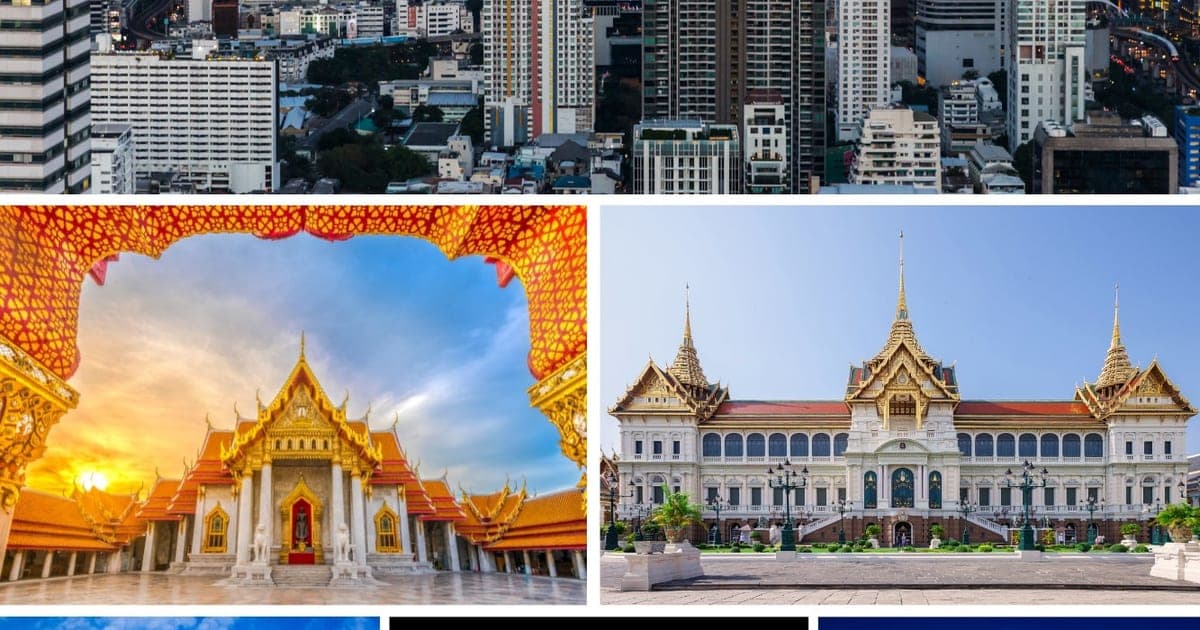
5. Bangkok — Yaowarat after dark
Bangkok's Chinatown turns its main road into a festival strip. In 2026 the Tourism Authority of Thailand listed celebrations on Yaowarat Road, from Odeon Circle to the Chaloem Buri intersection, running until 1 March, 18:00–23:00, with parades, ceremonies, cultural performances and food. Regional editions ran in Nakhon Sawan (until 21 February) and Hat Yai (16–25 February).
2027: dates not announced as of 4 October 2026. TAT's 2026 round-up appeared on 11 February, with the celebrations already under way, so expect short notice.
Weather: hot and dry, with highs of 32.7°C (91°F), lows of 23.3°C (74°F) and about 30 mm of rain in February (Thai Meteorological Department via the WMO, 1961–1990).
How to do it: go in the evening, eat your way along the road and stay close enough to walk back. Daytime heat makes air-conditioned museums or the river a better plan.
Book: a hotel within walking distance of Yaowarat for the first weekend of the new year.
Cost: the main spend is street food.
The trade-off: the festival is a single road, so it feels local and concentrated, and after one or two evenings you will have seen most of it.
6. Hội An — Tết in a lantern town
Hội An, now a ward of Đà Nẵng city, runs a full Tết programme. In 2026 the Hội An World Cultural Heritage Conservation Centre listed a spring flower fair (9–16 February), an old-style Tết market at the Hội An Museum, a New Year's Eve procession through the Old Town, a concert in Hội An Park and high-altitude fireworks at midnight. Its Nguyên Tiêu (Lantern Festival) celebration, listed as national intangible heritage, followed on the 14th to 16th days of the first lunar month, 2–4 March 2026.
2027: Tết Đinh Mùi is Saturday 6 February. On 2 October 2026 the government approved a seven-day break for civil servants, Thursday 4 to Wednesday 10 February (Tiền Phong). Hội An's programme was not out on 4 October 2026; the matching lunar days for Nguyên Tiêu are 19–21 February 2027.
Weather: Đà Nẵng averages 20.4–26.3°C (69–79°F) with 22 mm of rain; Hanoi is cooler at 16.2–21.3°C (61–70°F) (Viet Nam Meteorological and Hydrological Administration via the WMO, 1991–2020).
Book: domestic transport first. Vietnam Railways' site already carries its exchange and refund rules for Tết Đinh Mùi 2027, so watch it for sale dates.
The trade-off: Tết is a family holiday first. People spend the first days visiting relatives and pagodas (Vietnam News Agency), so confirm that your hotel, restaurants and tours will run.
7. Seoul — Seollal, a day later
Korea's official 2027 calendar puts Seollal on Sunday 7 February, a day after New Year's Day in China, Hong Kong and Vietnam. The holiday runs Saturday 6 to Tuesday 9 February, with the Tuesday added because Seollal falls on a Sunday (Korea AeroSpace Administration's 2027 almanac, reported by Seoul Shinmun). Seoul suits travellers who prefer palaces and museums to parades.
Palaces: the Korea Heritage Service opened Gyeongbokgung and Chilgung free over the 2026 Chuseok holiday (24–27 September), and the palaces publish free-admission guidelines for visitors wearing hanbok. No Seollal 2027 notice had appeared by 4 October 2026, so check royal.khs.go.kr in January.
Weather: −3.2°C to 5.1°C (26–41°F) with 28.2 mm of precipitation in February (Korea Meteorological Administration via the WMO, 1991–2020). Bring thermal layers, gloves and a hat.
Book: if you plan KTX day trips out of Seoul, avoid 6–9 February or book the moment sales open.
The trade-off: it is the second-coldest stop on this list, and the 2027 palace arrangements were unconfirmed when we checked, so this is a trip for culture over spectacle.
8. Beijing — temple fairs, if you can face the rush
In 2026 Beijing's Ditan, Longtan, Changdian (Liulichang) and Dadu temple fairs all ran from 17 to 23 February, the first seven days of the year, with heritage crafts, performances and food stalls (Beijing Municipal Government).
The rush: chunyun, the Spring Festival travel season, ran 40 days in 2026, 2 February to 13 March. The Ministry of Transport forecast 9.5 billion cross-regional trips and logged about 353 million on 20 February alone (Xinhua). China State Railway Group expected more than 539 million rail trips, and tickets go on sale only 15 days before departure.
2027: the holiday schedule was not published on 4 October 2026; the 2026 one appeared on 4 November 2025, with nine days off. Coverage of the 2024 holiday reform noted that a Friday New Year's Eve, as in 2027, allows a nine-day break (Guangming Online).
Weather: −6.9°C to 4.0°C (20–39°F) and very dry, about 6 mm in February (China Meteorological Administration via the WMO, 1961–1990).
Book: museums need real-name reservations; in 2026 the National Museum of China took bookings up to seven days ahead and closed on New Year's Eve. Some passports qualify for 240-hour visa-free transit with an onward ticket to a third country; see our international travel checklist.
The trade-off: you cannot lock in trains early, the whole country is on the move, and it is the coldest stop here. Fly in, stay put and go to the fairs.
Beyond Asia
9. London — Chinatown's celebration on Sunday 7 February
The London Chinatown Chinese Association bills its celebration as the largest outside Asia and has already fixed the 2027 date: Sunday 7 February. Its 2027 programme, venue included, had not been published on 5 October 2026. In 2026 a parade set off at 10:00 from east of Trafalgar Square into Chinatown, followed by a main stage in the square from 12:00 to 18:00 with speeches, the lions' eye-dotting ceremony, dragon and lion dances and food stalls; on the Saturday, lion dances toured Chinatown from 12:00 to 17:30 (Greater London Authority). Entry is free.
Weather: 2.7–9.0°C (37–48°F) with 45 mm of rain in February at Heathrow (Met Office, 1991–2020). Dress for long, damp hours outdoors.
Book: nothing for the main event. Reserve Chinatown restaurant tables early and arrive early on the day, as the 2026 organisers warned it would be crowded.
Make a weekend of it: a London trip on 6–7 February lines up with New Year's Day itself.
The trade-off: it is one day, mostly in daylight, in February weather, and the square fills fast; arrive late and you will watch over other people's shoulders.
10. Paris — the 13th arrondissement parade
The main Lunar New Year parade in Paris winds through the 13th arrondissement, organised by the association ARFOI since 1986, and the district town hall says it draws hundreds of thousands of spectators. In 2026 it ran on Sunday 1 March from 14:00 to 17:00, starting at 44 avenue d'Ivry and continuing along avenue de Choisy, boulevard Masséna and avenue d'Ivry (Mairie du 13e). Around it, the town hall listed concerts, dance and two exhibitions from 13 February to 1 March.
2027: date not announced as of 4 October 2026. The 2026 parade came 12 days after New Year's Day, so do not assume the first weekend.
Weather: Paris-Montsouris averages 3.3–8.8°C (38–48°F) in February, with about 84 hours of sunshine for the month (Météo-France, 1991–2020).
Book: nothing for the parade. Plan lunch in the 13th and claim a spot on the route well before 14:00.
The trade-off: the date comes out late and can fall weeks after New Year's Day, so you cannot plan a short break around it until the town hall publishes it.
11. New York — firecrackers on New Year's Day, a parade two weeks later
New York's Chinatown celebrates twice, and both 2027 dates are out. The Better Chinatown Society's 29th Firecracker Ceremony and Cultural Festival is on Saturday 6 February, New Year's Day itself, 11:00–15:30 at Sara D. Roosevelt Park at Grand Street. Its 29th Lunar New Year Parade and Festival follows on Sunday 21 February at 13:00 in Chinatown. In 2026 the festival booths ran 11:30–15:30 on Bayard Street between Mulberry and Mott, and the parade fell on 1 March.
Weather: Central Park averages −1.4°C to 5.7°C (29.5–42.2°F) in February, with 10.1 inches (26 cm) of snow in a typical February (NOAA, 1991–2020). Dress for standing still.
Book: nothing for the events. Seeing both means a New York stay from 6 to 21 February, so most short trips will choose one weekend.
Getting around: both events are in Lower Manhattan's Chinatown; take the subway, walk in, and arrive early for the 11:00 firecracker ceremony.
The trade-off: the two headline events are 15 days apart, so a short trip catches only one, and February cold makes long waits on the kerb hard work.
12. San Francisco — the illuminated night parade
San Francisco's parade, run by the Chinese Chamber of Commerce, calls itself the biggest Lunar New Year parade outside Asia and one of the few remaining illuminated night parades in North America; it moved from afternoon to evening in 1958. The 2027 date is set: Saturday 20 February, Lantern Festival night, stepping off at 17:15 from Second and Market Streets, looping around Union Square and ending at Kearny Street and Columbus Avenue. The route is about 1.3 miles (2.1 km) and the parade lasts about two and a half hours.
Weather: downtown averages 8.8–15.8°C (48–60°F) in February with about 111 mm of rain (NOAA, 1991–2020). The organisers say the parade is not cancelled for rain.
Book: standing behind the barricades is free. Bleacher seats are sold only online through Eventeny via the official site, are non-refundable and need checking in by 16:00; on 4 October 2026 the tickets page listed four sections but no prices.
Getting there: SFPD starts closing streets around 15:00, and the organisers recommend public transport.
The trade-off: it is a long, cool, often damp evening on your feet, and the best kerbside spots near Chinatown go early.
13. Sydney — summer lanterns and dragon boats
Sydney celebrates in summer. The City of Sydney's Lunar Festival ran from 14 February to 1 March 2026, and Darling Harbour's programme included hundreds of lanterns and free children's activities in Darling Square, tea ceremonies in the Chinese Garden of Friendship, and dragon boat racing on Cockle Bay over the final weekend, 28 February and 1 March, with 12-metre boats and more than 3,000 paddlers.
2027: dates not announced as of 4 October 2026, though the City was already inviting community performers to celebrate the Year of the Goat.
Weather: 19.7–26.5°C (67–80°F) in February, with 128.6 mm of rain over about 13 days (Bureau of Meteorology via the WMO, 1981–2010).
Book: the dragon boat weekend is the anchor, so book harbourside rooms for it once dates are out. For flights, see our guide to when and where to book cheap flights.
Cost: the children's activities in Darling Square were free in 2026.
The trade-off: it is a long-haul trip for a festival whose 2027 dates are not out, and the programme spreads over two weeks with no single big night.
Customs and etiquette worth knowing
- Before the day: families clean their homes, stock up and cook, then dine together on New Year's Eve and stay up late to see the year in (UNESCO, which listed the Spring Festival as intangible heritage in 2024). The Hong Kong Tourism Board says the cleaning clears out lingering bad luck from the old year.
- During the holiday: people wear new clothes, make offerings to heaven, earth and ancestors, and exchange greetings with relatives and neighbours (UNESCO).
- Red envelopes: elders, bosses and married people give lai see, red envelopes of lucky money (Hong Kong Tourism Board); in Vietnam, adults give lucky money to children and the elderly (Vietnam News Agency).
- First visitor: in Vietnam, the first person through the door on New Year's Day is believed to shape the household's year, so do not drop in unannounced that morning.
- Dress: Korea's royal palaces publish free-admission guidelines for visitors in hanbok.
- Length: the festivities end with the Lantern Festival on the 15th day of the first lunar month (Hong Kong Tourism Board), which is 20 February 2027 (Hong Kong Observatory).
When not to travel: crowds, prices and closures in holiday week
The crunch comes from everyone travelling home at once.
- Mainland China: the 2026 travel season ran 40 days, and Shanghai forecast its outbound expressway peak for 13 February and the return peak for 23 February. Avoid intercity trains around the official break.
- Hong Kong: in 2026 the Immigration Department expected 11.38 million arrivals and departures from 14 to 23 February, peaking at 636,000 departures on 14 February and 663,000 arrivals on 22 February.
- Taiwan and Vietnam, 4–10 February: both breaks start two days before New Year's Day, so book trains and flights early.
- Korea (6–9 February), Singapore (6–8 February) and Malaysia (6–7 February): shorter, weekend-based breaks.
Closures: the Hong Kong Museum of Art closes on the first two days of the year and at 17:00 on New Year's Eve. Hong Kong's New Year fairs end at 07:00 on New Year's Day, with live crowd levels online in 2026. Beijing's National Museum of China closed on New Year's Eve in 2026.
Prices: none of these official sources publish hotel price data, so we will not invent a percentage. Book refundable rooms early and avoid travelling on the peak days above.
Practical tips
- Book long-haul flights first, then rooms with free cancellation.
- Trains: China's 12306 app and website open tickets 15 days ahead, and foreign visitors can buy at station windows with a passport. In Vietnam, watch Vietnam Railways for Tết 2027 sales.
- Pack for two climates: Seoul's February lows average −3.2°C (26°F) and Singapore's highs 31.5°C (89°F); our travel packing checklist covers layering.
- Money: conversions use European Central Bank rates of 2 October 2026 (€1 = HK$8.81 = S$1.44). Carry cash for temple fairs and stalls.
- Crowd safety: at Hong Kong's fireworks, spots such as the Cultural Centre and the Avenue of Stars can reach capacity and people are redirected elsewhere; follow police instructions.
Plan Your Lunar New Year Trip in 30 Seconds
Pick a city and a date window, then build a day-by-day itinerary that puts the parade, fireworks or temple fair on the right night and keeps your travel days off the peak dates. It's free, and you don't need an account to see it.
Frequently Asked Questions (FAQ)
When is Lunar New Year 2027?
Lunar New Year's Day is Saturday 6 February 2027, with New Year's Eve on Friday 5 February. The Lantern Festival, the 15th day, is Saturday 20 February, and in Korea Seollal is Sunday 7 February.
Is 2027 the Year of the Goat, the Sheep or the Ram?
It is one zodiac year with several English names. The Hong Kong Observatory calls the Ding-wei year the Year of the Goat, San Francisco's parade organisers say Ram, and London's Chinatown association says Sheep.
What are China's Spring Festival holiday dates for 2027?
They were not published as of 4 October 2026; the 2026 schedule came out on 4 November 2025 and gave nine days off, 15–23 February. Coverage of the 2024 reform said a Friday New Year's Eve, as in 2027, allows nine days.
When is Tết 2027 in Vietnam?
Tết Đinh Mùi falls on Saturday 6 February 2027. On 2 October 2026 the government approved a seven-day break for civil servants, from Thursday 4 to Wednesday 10 February.
When is Seollal 2027 in South Korea?
Sunday 7 February 2027. The holiday covers Saturday 6 to Tuesday 9 February, with the Tuesday added because Seollal falls on a Sunday.
Where is the biggest Lunar New Year celebration outside Asia?
Two cities claim it. London's Chinatown association calls its celebration (in Trafalgar Square in 2026; next on 7 February 2027) the largest outside Asia; San Francisco calls its night parade (20 February 2027) the biggest Lunar New Year parade outside Asia. Both are free to watch from the street.
When and where is the Taiwan Lantern Festival 2027?
Miaoli County hosts it around HSR Miaoli Station, tentatively 20 February to 7 March 2027, according to Taiwan's Central News Agency and the Liberty Times. Treat those dates as provisional.
Sources
- Hong Kong Observatory: 2027 Gregorian-Lunar calendar (PDF)
- Hong Kong Tourism Board: Chinese New Year guide
- Labour Department: 2027 statutory holidays
- RTHK: Year of the Horse night parade
- TVB News: Night Parade details
- HKSAR Government: 2026 fireworks display
- HKSAR Government: Night Parade traffic
- HKSAR Government: Fireworks crowd safety
- HKSAR Government: 2026 New Year fairs
- news.gov.hk: Hong Kong revels in festive joy
- Hong Kong Jockey Club: February 2027 fixtures
- Hong Kong Observatory: 1991–2020 normals
- TVB News: Golden Week visitor forecast
- RTHK: Border traffic estimates
- Hong Kong Museum of Art: Opening hours
- Ministry of Manpower: Public holidays
- Visit Singapore: Chinese New Year
- River Hongbao: FAQs
- People's Association: Chingay
- Time Out Singapore: Chingay 2026 tickets
- Time Out Singapore: Chinatown celebrations
- Chinatown Festivals: 2027 centrepiece vote
- Meteorological Service Singapore: Climate
- DGPA: 2027 office calendar
- ETtoday: 2027 holiday calendar
- Central News Agency: 2027 Lantern Festival
- Liberty Times: Miaoli lantern zone
- TVBS: 2026 Taipei Lantern Festival
- National Immigration Agency: Pingxi 2026
- Central Weather Administration: Monthly means
- Prime Minister's Department: 2027 holidays (PDF)
- The Star: Penang dazzles for Chinese New Year
- WMO: Pulau Pinang
- Tourism Authority of Thailand: Chinese New Year 2026
- WMO: Bangkok
- Hội An Heritage Centre: Tết 2026 programme
- Tiền Phong: Tết 2027 break
- Vietnam Railways: Tickets
- WMO: Da Nang
- WMO: Hanoi
- Vietnam News Agency: Tet customs
- Seoul Shinmun: 2027 almanac
- Financial News: Seollal 2027
- Korea Heritage Service: Gyeongbokgung
- Royal Palaces and Tombs Center: Hanbok free-admission guidelines
- WMO: Seoul
- Beijing Municipal Government: Temple fairs 2026
- Beijing Municipal Government: Museum hours
- Gansu Provincial Government (Xinhua): Chunyun record
- Shanghai Municipal Government: Travel rush guide
- Shanghai Municipal Government: Train ticket sales
- Xinhua: 2026 holiday notice
- Guangming Online: Holiday reform
- National Immigration Administration: Visa-free transit
- WMO: Beijing
- London Chinatown Chinese Association: Chinese New Year 2027
- Greater London Authority: Lunar New Year 2026
- Chinatown London: Chinese New Year 2026
- Met Office: Heathrow averages
- Mairie du 13e: Nouvel An lunaire
- Météo-France: Paris-Montsouris normals
- Better Chinatown Society: 2027 dates
- NOAA NCEI: Central Park normals
- Chinese New Year Parade: FAQ
- Chinese New Year Parade: Bleacher tickets
- Chinese New Year Parade: History
- NOAA NCEI: San Francisco normals
- City of Sydney: Sydney Lunar Festival
- Darling Harbour: Lunar New Year
- Dragon Boat NSW: 2026 races
- WMO: Sydney
- UNESCO: Spring Festival listing
- European Central Bank: Reference rates