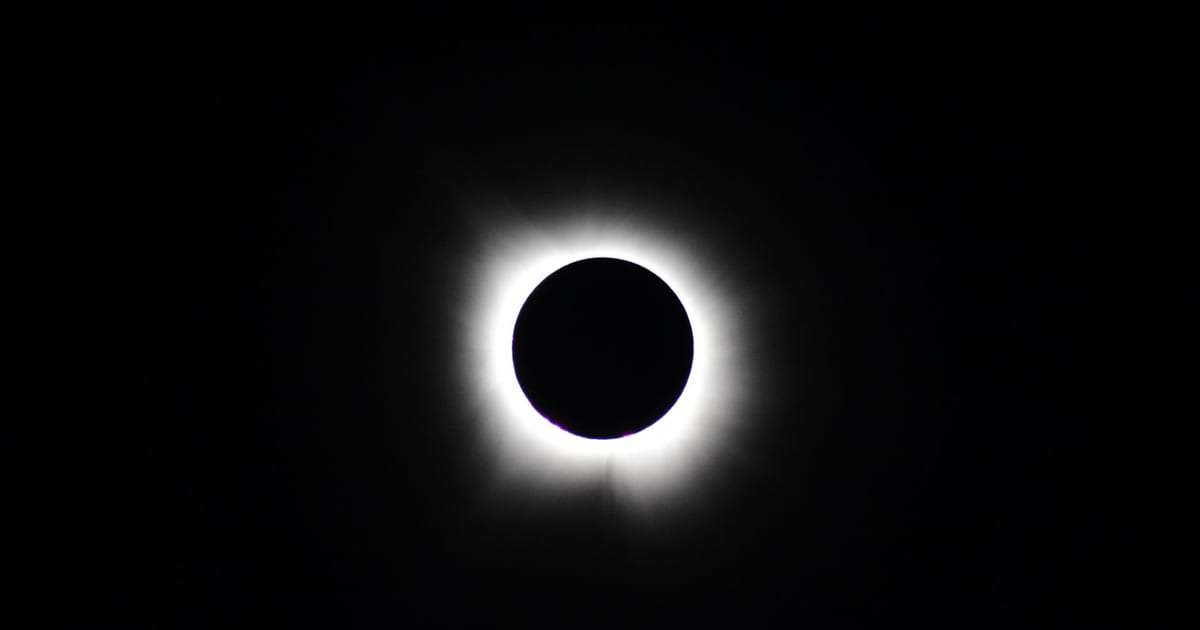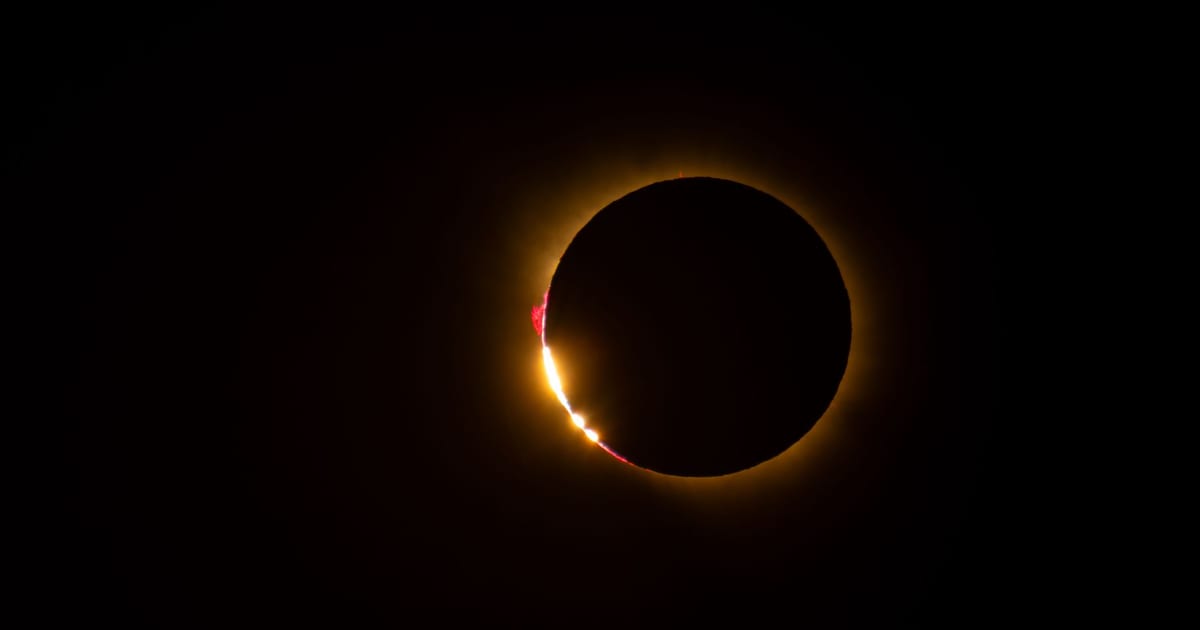
On Monday 2 August 2027 the Moon's full shadow crosses southern Spain, northern Morocco, Algeria, Tunisia, Libya, Egypt, Saudi Arabia, Yemen and Somalia. For the easy trip, go to the Strait of Gibraltar: up to about 4 min 50 s of darkness in mid-morning, in beach weather. For the long one, go to Luxor: 6 min 20 s at 13:02 local time, at 41°C (106°F).
This guide is for anyone deciding where to stand, and for readers at home who want to know what they'll see. Check your exact spot before you pay: Seville, Granada, Almería city, Tunis, Lampedusa, Aswan and Hurghada all miss totality, some by only a few kilometres.
Every date, time and rule here was read on the official page on 6 November 2026: Spain's National Geographic Institute (IGN) and eclipse commission, NASA and national travel advisers. Press figures are marked "reported by". Times are local with the zone named; CEST is Spanish summer time, UTC+2.
| Place | Totality | When (local) | Sun height | August high | Clear skies at eclipse time | Main catch |
|---|---|---|---|---|---|---|
| Cádiz province: Conil, Vejer, Barbate, Tarifa | 4:01–4:38 | 10:45–10:50 CEST | 38° | 25–28°C (76–82°F) | 74% on the Barbate–Tarifa coast, 88% in Cádiz city | Sea cloud on the coast; the wildest asking prices |
| Costa del Sol: Málaga to Estepona | 1:48–3:37 | 10:46–10:50 CEST | 39° | 31°C (87°F) | About 89% at Marbella | Short totality at the Málaga end |
| Ceuta | 4:48 | 10:45–10:50 CEST | 38° | 28.5°C (83°F) | About 72% | Ferry or helicopter from the mainland; the US says "reconsider" |
| Melilla | 4:34 | 10:48–10:53 CEST | 41° | 29.4°C (85°F) | About 69% | The cloudiest stop here |
| Tangier and Tetouan | 4:50–4:51 | 08:45–08:49 GMT | 38° | 28.6°C (83°F) | About 84% at Tangier | Passport, and clocks two hours behind Spain |
| Sfax, Tunisia | 5:39 | 10:09–10:14 UTC+1 | 56° | 33°C (92°F) | About 92% | Hotter; read the travel advice |
| Luxor | 6:20 | 13:02–13:08 UTC+3 | 82° | 41°C (106°F) | Cloud almost unknown | Heat, and rooms reported nearly gone |
| Marsa Alam, Red Sea | 5:31 | 13:08–13:13 UTC+3 | 81° | 36°C (96°F) | 92% sunshine | No temples on the doorstep |
Durations come from IGN for Spain and NASA's Solar Eclipse Explorer elsewhere. Highs are normals from Spain's weather agency AEMET and from NOAA, or Eclipsophile's tables for Tangier, Sfax and Marsa Alam. "Clear skies" is Eclipsophile's satellite check of mid-July to mid-August in 2024 and 2025: two summers only, read off its chart where we say "about".
Where the path of totality goes, country by country
NASA's path table shows a track 236 km (147 miles) wide at the Strait and 258 km (160 miles) wide in Egypt.
- Spain: Ceuta, Melilla, almost all of Cádiz province, much of Málaga province and the southern edges of Granada and Almería, according to IGN. Totality falls between about 10:45 and 10:53 CEST.
- Gibraltar: 4:26 from 10:45 CEST.
- Morocco: Tangier 4:50, Tetouan 4:51, Chefchaouen 4:13, Al Hoceima 4:25, Nador 4:14.
- Algeria: Oran 5:07, Tlemcen 3:09. Algiers stops at 99.8%.
- Tunisia: Sfax 5:39, Djerba 4:40, El Jem 4:24, Mahdia 2:48.
- Libya: Benghazi 6:09. Tripoli sits on the southern limit and just misses on NASA's explorer.
- Egypt: Siwa 5:28, Bahariya 6:17, Sohag 6:22, Luxor 6:20, Marsa Alam 5:31. Greatest eclipse is at 10:06 UT in the desert east of Luxor, and the longest totality anywhere, 6 min 23 s, lies on the centre line between Asyut and Luxor.
- Saudi Arabia: Jeddah 5:56, Mecca 5:08.
- Yemen and Somalia: Sana'a 2:16, Bosaso 3:58, then out over the Indian Ocean.
EclipseWise's country list omits Tunisia, but NASA's table runs the centre line across it. Portugal, Italy and France get no totality, and the path misses Porto Santo and Madeira by about 70 km (Eclipsophile).
Near the edge: who gets totality and who misses
This is where people lose money. Totality shrinks fast near the limit and then vanishes, and 99% is not totality: outside the path, the American Astronomical Society says, it's never safe to look without a filter.
| Place | Verdict | What you get | Nearest better option |
|---|---|---|---|
| Málaga city | In, near the northern edge | 1:48 | Fuengirola 3:10, Marbella 3:17 |
| Cádiz city | In | 2:54 | Chiclana 3:29, Conil 4:01 |
| Jerez | In, barely | 1:22 (IGN); 1:37 in the centre and 0:30 at the airport (NASA) | Medina Sidonia 3:20, Vejer 4:05 |
| Sanlúcar, Chipiona | Out, by a hair | Over 99.9% | Rota 2:11 |
| Seville | Out | 98.4% | Jerez 1:22 |
| El Gastor, Antequera | Out | 99.9%, 99.6% | Ubrique 1:58, Málaga 1:48 |
| Granada | Out | 99.2% | Motril 1:42, Almuñécar 1:49 |
| Almería city and airport | Out, by a hair | Over 99.9% | Roquetas de Mar 1:31, Cabo de Gata lighthouse 2:04 |
| Las Negras, Rodalquilar, Níjar town | Out | 99.8–99.9% | San José 1:35, Playa de Mónsul 1:58 |
| Fes, Rabat, Casablanca | Out | 98.4%, 98.6%, 97.1% | Chefchaouen 4:13, Tangier 4:50 |
| Tunis, Hammamet | Out | 97.1%, 98.3% | El Jem 4:24, Sfax 5:39 |
| Sousse, Monastir | Out, close | 99.9% | Mahdia 2:48 |
| Lampedusa | Out | 99.8% | None on Italian land |
| Aswan | Out, close | 99.8% | Kom Ombo 3:21, Edfu 5:29 |
| Abu Simbel | Out | 92% | Luxor 6:20 |
| Hurghada, Safaga | Out | 98.6%, 99.6% | El Quseir 2:31, Marsa Alam 5:31 |
| Cairo | Out | 94.8% | Minya 4:09, Asyut 6:07 |
| Medina | Out | 94.5% | Jeddah 5:56 (see the travel advice below) |
Spanish verdicts follow IGN's municipal table; percentages and other places come from NASA's explorer. A town's figure covers one point, and a municipality can straddle the line: Almería's centre misses but its Cabo de Gata end doesn't. That may be why Euro Weekly News lists Almería city, Níjar and Berja as in totality, when IGN's table doesn't.
Figures move fast near the edge, as Jerez shows, and NASA says the Moon's uneven limb can move the limits by 1 to 3 km. If you're within a few kilometres of the line, move, and check your street on IGN's eclipse viewer before you pay.
Demand doesn't follow the map, either. Reported by QuiFinanza, Lampedusa is sold out, though NASA's limits put it about 16 km (10 miles) outside the path. Reported by Logos Press, relaying Euronews, 87% of Seville listings on Booking.com were gone by August 2026. Egypt Independent mentions viewing events at Abu Simbel.
 Not sure where to go yet?Answer six quick questions and get the place that fits you, then plan it in one tap.Find my place
What you'll see from home
| City | Sun covered | Starts | Maximum | Ends | Time zone |
|---|---|---|---|---|---|
| Madrid | 86% | 09:45 | 10:51 | 12:03 | UTC+2 |
| Barcelona | 82% | 09:51 | 10:59 | 12:11 | UTC+2 |
| Lisbon | 93% | 08:41 | 09:45 | 10:55 | UTC+1 |
| Porto | 83% | 08:43 | 09:46 | 10:55 | UTC+1 |
| Faro | 99% | 08:40 | 09:45 | 10:57 | UTC+1 |
| Rome | 75% | 10:02 | 11:13 | 12:27 | UTC+2 |
| Milan | 62% | 10:02 | 11:08 | 12:17 | UTC+2 |
| Palermo | 90% | 10:01 | 11:15 | 12:33 | UTC+2 |
| Paris | 51% | 10:01 | 11:01 | 12:05 | UTC+2 |
| London | 42% | 09:04 | 10:00 | 10:59 | UTC+1 |
| Mumbai | 32% | 15:47 | 16:42 | 17:31 | UTC+5:30 |
| Bengaluru | 39% | 15:59 | 16:53 | 17:43 | UTC+5:30 |
| Delhi | 8% | 15:54 | 16:29 | 17:03 | UTC+5:30 |
| New York | Nothing visible | – | – | – | – |
| São Paulo | Nothing visible | – | – | – | – |
These are NASA's explorer figures, rounded, with IGN's times for Madrid and Barcelona. NASA shows nothing for any US or Brazilian city we tested, apart from a 0.4% nick at sunrise in Eastport, Maine. Keep your glasses on throughout.
Percentages are the share of the Sun's area covered, not the magnitude IGN lists (0.88 in Madrid).
Cádiz province: Conil, Vejer, Barbate and Tarifa
Why here: IGN's table gives Tarifa 4:38, Barbate 4:16, Vejer 4:05 and Conil 4:01, all from about 10:45 CEST, with the Sun 38° up in the east. It's over at about noon, so you keep the afternoon for the beach.
When to go: Arrive by Sunday 1 August at the latest. Spain's "1 August" traffic operation ran from 31 July to 2 August in 2026; the 2027 dates aren't announced.
What to book: Sleep a little inland if you can. Eclipsophile's survey gave Cádiz city 88% of sun-visible days but Barbate, Atlanterra and Tarifa only 74% in its text (its chart reads about 77%), because of morning sea cloud. It advises going inland, where cloud averages under 15%. Benalup-Casas Viejas (3:50), Los Barrios (4:19) and Castellar (4:04) all keep a long totality.
Getting there and cost: Jerez airport is just inside the path, and the C-1 train reaches Cádiz in about 57 minutes. You'll want a car for Conil, Vejer and Tarifa.
Asking prices are extreme. Reported by Euronews, a six-person villa in El Palmar asked €33,129 for the night and three Tarifa properties €11,090 to €13,260. Reported by Andalucía Informa, the cheapest two nights in Cádiz city cost €3,600, against €450 a week later. Those are listings, not what people pay.
The trade-off: Highs are mild, at 24.5°C in Tarifa and 27.9°C in Cádiz, but asking prices are the steepest on the route, the levante wind can blow for days, and about one coastal morning in four may have cloud.
Costa del Sol near Málaga
Why here: It has the easiest flights and good odds. Atlantic cloud rarely gets past Tarifa, and Marbella scored about 89% in Eclipsophile's survey.
What to book: Sleep as far west as you can afford, because totality grows town by town: Málaga 1:48, Torremolinos 2:41, Fuengirola 3:10, Marbella 3:17, Estepona 3:37, Manilva 3:47 (IGN). All fall between 10:46 and 10:50 CEST, with the Sun 39° up.
Getting there and cost: Málaga airport is in the path, with 2:16 on NASA's explorer. Reported by idealista, an Estepona flat asked over €4,200 a night, while the Costa del Sol hotel association saw eclipse-date occupancy at some hotels at about 12%, against the usual 7% a year out.
The trade-off: It's hotter, with a 30.8°C (87°F) August high, the whole coast funnels along one road corridor, and Málaga city gets less than half of Tarifa's darkness.
Ceuta
Why here: IGN gives Ceuta Spain's longest totality, 4:48 between 10:45 and 10:50 CEST. Spain's eclipse commission names the Royal Walls and Monte Hacho as viewpoints.
Getting there and cost: Aena lists a heliport, not an airport, so you arrive by helicopter or by ferry from Algeciras. Ferryhopper shows 1 to 1.5 hours from about €30, in normal times.
What to book: The room and both ferry legs together, crossing by 1 August.
The trade-off: You can't dodge cloud on a small enclave, and the survey gives about 72%. The US State Department says "reconsider travel to Ceuta due to unrest" (1 August 2026), after what Spain's Interior Ministry calls a migration crisis on 30–31 July. The commission still calls it a premium location, so check again before you pay.
Melilla
Why here: You get 4:34 from 10:48 CEST with the Sun 41° up. The commission points to the old citadel, Melilla la Vieja.
Getting there and cost: Melilla has its own airport. The ferry from Málaga takes 6 to 7 hours, from about €53 in normal times.
The trade-off: It has the weakest sky here. Sunshine averages 61% of the possible, against 75–80% at many other places on the track (Eclipsophile). Moving inland would help, but inland is Morocco, across a border.
Tangier and northern Morocco
Why here: The centre line passes about 10 km (6 miles) south of Tangier, so it gets 4:50 and Tetouan 4:51, with the Sun 38° up. Reported by idealista, week-long packages cost much like Djerba's, which start at about €1,200 to €1,300 a person.
When to go: Watch the clock. Morocco moved to GMT all year on 20 September 2026 (tz database), so totality in Tangier is at about 08:45–08:49 local, two hours behind Spain. Read ferry times carefully. Older pages, including Eclipsophile's, still say about 9:44.
What to book: Eclipsophile favours central or eastern Tangier and the Bay of Tangier beaches, to avoid lingering mist; the city scored about 84%. Chefchaouen scored about 95% but gets only 4:13. It says to avoid the coast from Tetouan to El Jebha, and cloud can outlast totality at Asilah and Larache.
Getting there and cost: Fly to Tangier, which is in the path, or sail from Tarifa to Tanger Ville, about an hour and about €27 to €40 one way in normal times. Algeciras ferries land at Tanger Med, well outside the city.
The trade-off: You need a passport, and you share ports with summer holiday traffic. The UK's FCDO says "terrorists are likely to try to carry out attacks in Morocco" but its regional advice covers only Western Sahara and the closed border with Algeria; the US rates Morocco Level 2.
Luxor and the Nile
Why here: Luxor gets 6:20 and Karnak 6:21, from 13:02 to 13:08 Egyptian summer time (UTC+3), with the Sun 82° up. Eclipsophile says cloud is almost unknown and the main threat is thin cirrus. The centre line, with up to 6:23, passes just north of the city.
When to go: Arrive by 1 August and sightsee at dawn. August averages 41.2°C (106°F) by day and 25.6°C (78°F) at night, with 0.07 mm of rain (NOAA). Eclipsophile reports an average of 42°C on 2 August over 17 years, with a 46°C record.
What to book: A room or cabin for 1 August, now. If Luxor is full, try Sohag (6:22), Qena (6:11), Esna (5:44) or Edfu (5:29). Boats move, so ask where yours will be at 13:00 on 2 August: Aswan is outside the path.
For cooler air, Marsa Alam gets 5:31 with a 35.6°C high. Eclipsophile's safest skies are at Siwa (5:28) and Bahariya (6:17), but the US says to enter the Western Desert only with a licensed tour company.
Getting there and cost: Fly into Luxor, usually via Cairo. Egypt's e-visa portal lists US$30 for a single-entry tourist visa (about €27 at the ECB rate of 6 November 2026).
Reported by Travel Noire, citing CNN, over 90% of Luxor listings on Booking.com were gone and many of the rest asked over US$2,695 a night (about €2,410). Reported by idealista, a 10-day package from about €4,300 a person has its 30 July departure sold out.
The trade-off: You'll stand in 40°C-plus heat with the Sun almost overhead, when even temple columns cast little shade. The FCDO's warnings don't cover Luxor, but it says terrorist attacks are likely in Egypt, advises against driving outside main cities at night and notes accidents on Nile cruises. Its 27 October update calls the wider Middle East "deeply unpredictable", one more reason to hold a cancellable booking. The US rates Egypt Level 2.
Tunisia, Libya and Saudi Arabia: what the travel advice says
Tunisia is worth a look. Sfax gets 5:39 from 10:09 (UTC+1), with the Sun 56° up and the lowest cloud on the western track (Eclipsophile). The FCDO warns against Mount Chaambi, Kasserine and the Libyan border zone; Sfax and Djerba aren't on its list. But its safety page says terrorists are likely to try to carry out attacks in Tunisia, lists a 2023 shooting on Djerba, and names Sfax among towns with anti-migrant protests and violence. The US rates Tunisia Level 2 and notes a state of emergency. Fly to Sfax or Djerba: reported by idealista, easyJet bookings to Enfidha jumped, yet Enfidha's airport is outside the path at 99.4%.
The trade-off: It's 33°C (92°F) in August, and the resort strip from Hammamet to Monastir misses.
Libya: no. The FCDO advises against all travel, easing to all but essential travel for Tripoli, Benghazi, Al-Bayda, Derna and Misrata. The US says do not travel for any reason.
Saudi Arabia: not now. Jeddah gets 5:56, but the FCDO advises against all but essential travel (27 October 2026) and reports a missile strike on Riyadh's main airport on 10 October. The US says reconsider travel and ordered non-emergency staff out on 23 October.
Algeria, Yemen and Somalia. Oran gets 5:07. The FCDO's Algeria warnings cover border zones, it says terrorists are likely to try to carry out attacks there, and the land border with Morocco is closed. The US rates Yemen and Somalia Level 4, do not travel.
Advice changes, so read it again before you book and fly. Travelling against FCDO advice can invalidate your insurance.
What the authorities have announced so far
- Spain: The interministerial commission began preparing for 2027 on 8 October 2026. Its mobility page lists traffic plans, police reinforcement and a transport study, but we found no 2027 road rules yet. In 2026 the traffic authority, the DGT, set an "absolute ban" on stopping on carriageways or hard shoulders to watch.
- Andalusia: Reported by El Independiente, the region planned a field test of access, parking and services on 2 August 2026; we found no report of the results. Reported by Moncloa.com, a news site and not the government, a "mirror day" on 10 May 2027 puts the Sun where it will stand on eclipse day.
- Gibraltar: The government expects visitors, possibly in the thousands, and is planning viewing sites and transport.
- Egypt: Reported by Revista Mercado, the tourism ministry's committee is coordinating viewing sites, transport and security, and may adjust hours at archaeological sites. We found no published programme.
- Morocco and Tunisia: We found no published plan. Reported by La Presse, Tunisia's higher education minister chaired the first meeting of an eclipse coordination committee on 16 April 2026.
What to book first, and how far ahead
Spain's commission warns that rooms and transport in the best areas usually sell out months ahead. So, in this order:
- The room, now, nine months out. Take a free-cancellation rate even at a premium, because your best town may change. Note the deadline and read the terms for those exact nights. It protects you if you change your mind, not if the host does: we found one public complaint about a flat cancelled for 12 August 2026 and, the customer says, resold at higher prices, but no reports of mass host cancellations. We'd still pick a hotel over a private flat. Reported by Andalucía Informa, tourist rentals in Andalusia must be on a national register, so ask for the number.
- Don't pay five figures in panic. Reported by idealista in September 2026, occupancy for the eclipse dates at the rental firm Ruralidays had reached only 12% in Cádiz province, and 22% in El Gastor, which gets no totality. Reported by Euronews, some Cádiz hotels have temporarily closed bookings. Keep checking through the winter, and go non-refundable only at a price you could afford to lose.
- Flights, within weeks. Airlines usually sell about a year ahead, so August 2027 is on sale or close to it. Arrive by 31 July and leave on 3 August or later.
- A car, with the flights. Take a cancellable rate, collect it on arrival, and check the contract before putting it on a ferry.
- Ferries, as soon as sailings appear. We found no announcement of extra eclipse crossings. Spain's Strait holiday-traffic operation ran from 15 June to 15 September in 2026; the 2027 dates aren't out. Cross by 1 August, never on eclipse morning.
- Glasses, by spring. Spain gave away 2 million pairs in 2026; we found no 2027 giveaway announced.
- Paperwork. The EU's ETIAS authorisation for visa-exempt visitors will cost €20, with the start date to be announced several months ahead. If you need a Schengen visa, start early.
Our packing checklist and packing list tool cover the rest of the bag.
On the day: where to stand, roads, heat and water
Where to stand. In Spain and Morocco the Sun is 37–41° up, almost due east, so pick open ground with nothing tall to the east. In Luxor it's almost overhead, so any open ground works. Check Andalusia's official viewing points on the commission's site closer to the date.
Getting there. The commission asks you to avoid travel on the day, "especially after the maximum", and says a spot near a main road with about a minute of totality is fully satisfying. We'd sleep inside the path and walk. If you must drive, park by 09:00 CEST: the partial phase starts at about 09:41 (07:40 in Tangier, 11:40 in Luxor).
Leaving. The 2026 report counted 26 million extra trips nationwide that day, on foot included, and 64% of same-day departures from the totality band came between 21:00 and 22:00, just after the eclipse. National roads saw only localised jams, but the DGT warned about secondary roads and exits from viewing points. Stay for lunch and leave in late afternoon.
Heat and water. Bring water, food, a full tank and a charged phone (the commission's checklist), and download offline maps, because networks may saturate. In Luxor, Eclipsophile suggests a buddy system for heat stroke and a damp white cloth over your camera, since many shut down near 45°C.
Fire. The commission says the eclipse falls in Spain's peak fire season: no flames, and no parking on dry vegetation.
Eye safety: glasses, phones and the only safe moment
- Glasses: Use viewers that meet ISO 12312-2, as NASA and the AAS both advise. In the EU, look for "EN ISO 12312-2:2015" and a genuine CE mark. "ISO 12312-1" means ordinary sunglasses, and those aren't safe, however dark.
- Where to buy: The AAS says to buy from known makers or listed suppliers, not from whatever pops up in ads; for Europe it points to Spain's Eclipse Seguro list. Spain's 2026 inspections flagged 7 models, too dark rather than dangerous, and found more failures online than in shops.
- When to take them off: Only when the Moon completely covers the Sun's bright face. Put them back as soon as the bright Sun returns (AAS). Spain's commission agrees that's the only safe moment, though it recommends leaving them on. Outside the path, that moment never comes.
- Cameras, binoculars and telescopes: Never use eclipse glasses with them. NASA and the AAS say the solar filter must be fixed to the front of the optics.
- Phones: NASA says to protect any camera with a solar filter during the partial phases and remove it for totality. Neither NASA nor the AAS gives phone settings, though the AAS lists smartphone filters.
- Before you go: Throw away scratched or torn viewers (AAS) and supervise children (the commission). ESA suggests a pinhole camera as a safe indirect view.
Sample plans: five days in Cádiz, seven days on the Nile
Five days in Cádiz province. Land at Jerez on Saturday 31 July, collect a car and settle around Vejer or Benalup. On Sunday, test your viewing spot at 10:45, then swim at El Palmar. On Monday be in place by 09:00: the partial phase starts at about 09:41, totality comes at about 10:45 and it ends around noon, so stay put for a long lunch. Tuesday is for Tarifa and the Roman ruins at Bolonia, Wednesday for Cádiz city before you fly. Plan the days around it and adjust them by chatting.
Seven days on the Nile and in Luxor. Fly via Cairo to Aswan on Thursday 29 July and join a boat sailing north past Kom Ombo and Edfu, reaching Luxor by Sunday 1 August; check its calendar first, because Aswan is outside the path. On Monday 2 August the partial phase starts at 11:40, totality runs from 13:02 to 13:08 and it ends at 14:26, so bring shade and plenty of water. Spend Tuesday's dawn on the West Bank and Wednesday's at Karnak, then fly home that day. Build your itinerary with the eclipse on day five.
Frequently asked questions
What time is the eclipse on 2 August 2027?
Totality starts at about 10:45 to 10:50 CEST in Spain, 08:45 GMT in northern Morocco, 10:09 (UTC+1) in Sfax and 13:02 (UTC+3) in Luxor.
Where can I see totality in Spain?
In Ceuta, Melilla, almost all of Cádiz province, much of Málaga province and the southern edges of Granada and Almería. Everywhere else in Spain gets a partial eclipse of at least 70%, says IGN.
Will Málaga, Seville and Granada see totality?
Málaga will, for 1:48. Seville and Granada won't: they reach 98.4% and 99.2%. From Granada, the coast at Motril or Almuñécar is the nearest totality.
Can I see the total eclipse from Italy?
No. Lampedusa comes closest at 99.8%. Palermo gets about 90%, Rome 75% and Milan 62%. The nearest totality on land is in Tunisia.
Can I see it from the US, Brazil or India?
Not from Brazil, and from the US only a tiny nick at sunrise in eastern Maine. India gets a late-afternoon partial eclipse: Bengaluru 39%, Mumbai 32%, Delhi 8%, all around 16:30 to 17:00 local time.
Spain or Egypt: which is better?
Egypt wins on length and sky, with 6:20 and almost no cloud. Spain wins on ease and comfort: a short flight for Europeans, mid-morning timing and coastal highs of 25–31°C.
Is it too late to book?
No, but start now. Luxor looks tightest. In Spain, listings are expensive, but the press reports low occupancy so far. Hold a cancellable room and keep looking.
When is the next total eclipse in Spain?
Not until 2053, says IGN. The next solar eclipse visible from Spain is the annular one on 26 January 2028.
Plan the rest of the trip
MonkeyTravel, our free AI trip planner, writes a day-by-day plan you can change by chatting with it and share with your group. It doesn't book anything, so hold your rooms first. For more ideas, see the best places to travel in 2027, where to go in August and our 2027 travel calendar.
Sources
- IGN: Total solar eclipse of 2 August 2027
- IGN: Table of eclipse times for every Spanish municipality
- IGN: Interactive eclipse viewer
- NASA: Path table for the 2027 eclipse
- NASA: Solar Eclipse Explorer, local circumstances by coordinates
- EclipseWise: Eclipse summary and country list
- NASA: Eclipse viewing safety
- NASA: Five tips for photographing a total solar eclipse
- American Astronomical Society: Eye safety
- American Astronomical Society: Solar filters for optics
- American Astronomical Society: Suppliers of safe viewers
- ESA: A look back at the 2026 total solar eclipse
- Trío de Eclipses: Commission begins preparing for 2027
- Trío de Eclipses: Mobility advice for 2 August 2027
- Trío de Eclipses: Eye health
- Trío de Eclipses: Prevention and risks
- Trío de Eclipses: Tourism and planning advice
- Trío de Eclipses: Responsible tourism checklist (PDF)
- Trío de Eclipses: Ceuta
- Trío de Eclipses: Melilla
- Spanish Science Ministry: Executive summary of the 2026 eclipse (PDF)
- DGT: Road safety advice and rules for the 2026 eclipse
- La Moncloa: Strait crossing operation, first month of 2026
- La Moncloa: Summer 2026 traffic operation
- La Moncloa: Spain's request to the EU on Ceuta
- Eclipsophile: Weather and climate for the 2027 eclipse
- AEMET: Climate normals, Cádiz
- AEMET: Climate normals, Tarifa
- AEMET: Climate normals, Málaga airport
- AEMET: Climate normals, Ceuta
- AEMET: Climate normals, Melilla
- NOAA NCEI: WMO Climate Normals 1991–2020, including Luxor station 62405
- GOV.UK: Egypt travel advice
- GOV.UK: Egypt safety and security
- GOV.UK: Morocco safety and security
- GOV.UK: Morocco regional risks
- GOV.UK: Tunisia travel advice
- GOV.UK: Tunisia safety and security
- GOV.UK: Libya travel advice
- GOV.UK: Saudi Arabia travel advice
- GOV.UK: Algeria travel advice
- US State Department: Travel advisories data feed
- IANA tz database: Time zone rules for Africa
- Aena: Trains from Jerez airport
- Aena: Ceuta heliport
- Aena: Melilla airport
- Egypt e-Visa Portal: Fees and eligibility
- European Union: ETIAS
- European Central Bank: Euro reference rates
- Government of Gibraltar: Planning begins for solar eclipses
- Ferryhopper: Tarifa to Tangier
- Ferryhopper: Algeciras to Ceuta
- Ferryhopper: Málaga to Melilla
- Press, FNH: Morocco returns to GMT for good
- Press, Euronews: Eclipse asking prices in El Palmar and Tarifa
- Press, Andalucía Informa: Tourist flat prices in Cádiz province
- Press, idealista: Flights, hotels and packages for the eclipse
- Press, Euro Weekly News: Almería demand and towns listed
- Press, Logos Press: Bookings and availability, relaying Euronews
- Press, QuiFinanza: Lampedusa reported sold out
- Press, Travel Noire: Luxor availability, citing CNN
- Press, Revista Mercado: Egypt's eclipse committee
- Press, Egypt Independent: Egypt's temples prepare for the eclipse
- Press, La Presse: Tunisia's eclipse coordination committee
- OCU: Public consumer complaint about a cancelled stay for 12 August 2026
- Press, El Independiente: Andalusia's field test day
- Press, Moncloa.com: Andalusia's rehearsal dates