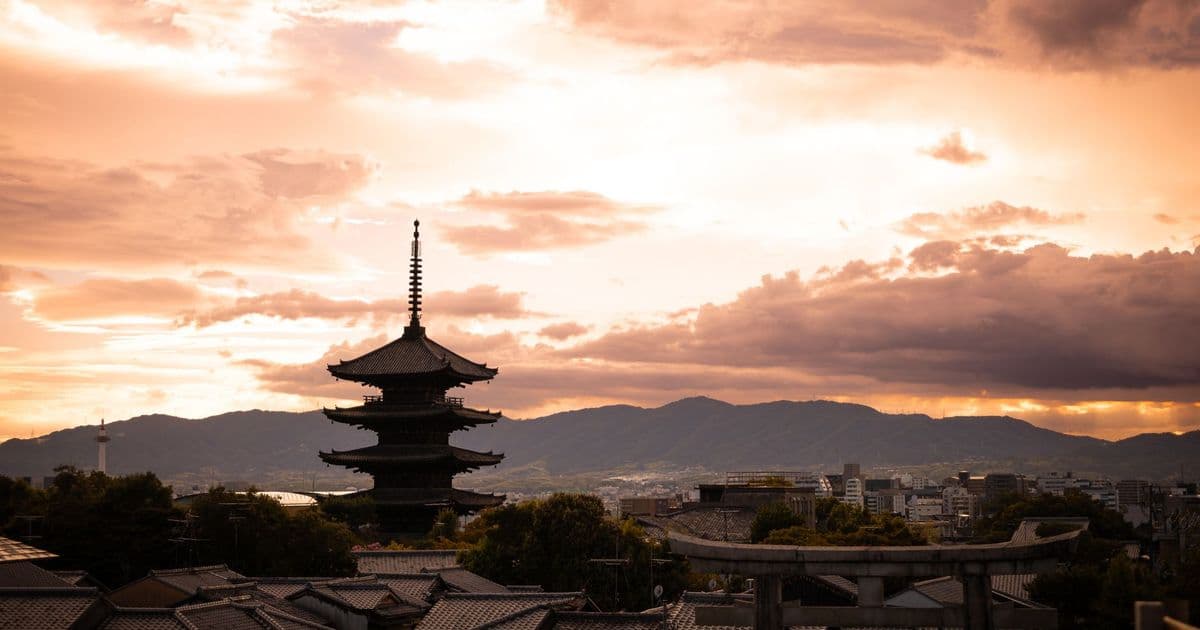
 Japan
Kyoto
A thousand temples, paced so you actually feel them
Kyoto rewards sequencing more than any city in Japan. The classic mistake is cramming eight temples into a day and remembering none of them; the fix is rhythm. Start Fushimi Inari at 6:30 AM, when the 10,000 vermilion torii gates hold morning mist instead of tour groups — the full mountain loop takes two hours, but the crowds only reach the first third. Spend midday in Arashiyama: the bamboo grove is a 10-minute walk, but Tenryu-ji's 14th-century garden and the Okochi Sanso villa above it are where the district actually breathes. Save Gion for dusk, when lanterns come on along Hanamikoji and geiko hurry to appointments — respect the private-alley signs; fines apply since 2024. Buses are slow and packed; the two subway lines plus JR and Keihan trains cover almost every route that matters (get an ICOCA card, ¥220-360/ride). Temple entries run ¥400-600, Kinkaku-ji is ¥500, and a counter kaiseki lunch costs a third of its dinner price. In cherry-blossom April and maple November, book rooms months ahead. Let AI sequence the temples, trains, and tea houses into a day-by-day plan that moves against the crowd flow instead of with it.
Best Time to Visit Kyoto
Month-by-month weather, crowds, and season breakdown for Kyoto
Spring
Sakura peaks late March to early April — the Philosopher's Path and Maruyama Park fill with hanami picnics, and the Miyako Odori geiko dances run all April. Book rooms 3-4 months out; this is Kyoto's tightest season.
Summer
Hot and humid (33°C), but July belongs to Gion Matsuri — float parades on the 17th and 24th, street evenings with lanterns before each. Kawadoko dining platforms over the Kamogawa river and Kibune stream make the heat part of the ritual.
Autumn
Koyo (autumn foliage) peaks mid-November to early December — Tofuku-ji's maple valley and Arashiyama turn crimson, and temples like Eikan-do and Kodai-ji run night illuminations. November crowds rival April; weekdays are noticeably calmer.
Winter
The quiet season — cold, clear days around 9°C, with occasional snow that turns Kinkaku-ji into the photo of the year. Yudofu (hot tofu) restaurants near Nanzen-ji come into their own, and Hatsumode New Year shrine visits pack the first three days of January.
Why Visit Kyoto
Fushimi Inari at Dawn
The 10,000 torii gates are open 24 hours and free — arrive by 6:30 AM and you'll share the mountain with joggers and shrine cats. The Yotsutsuji viewpoint halfway up catches sunrise over southern Kyoto; the full loop takes about 2 hours
Arashiyama Beyond the Bamboo
The grove itself takes 10 minutes — the real reasons to cross town are Tenryu-ji's borrowed-scenery garden (¥500), the Okochi Sanso villa with matcha included (¥1,000), and monkeys at Iwatayama with the whole city below (¥800)
Gion at Dusk
Walk Hanamikoji and the Shirakawa canal at lantern-lighting time, when geiko and maiko head to evening engagements. Stick to public streets (private alleys carry ¥10,000 fines since 2024) and book a cultural performance at Gion Corner (¥5,500) if you want the full arts sampler
Sakura & Koyo Timing
Cherry blossom peaks around April 1 (Philosopher's Path, Maruyama Park); maple season peaks mid-to-late November (Tofuku-ji, Eikan-do night illumination, ¥600-1,000). Both weeks sell out hotels — plan these dates first and build the rest of Japan around them
Sample Day in Kyoto
This is a sample day. MonkeyTravel AI creates a full multi-day itinerary personalized to your pace, budget, and interests.
Fushimi Inari before the crowds
Take the first JR Nara Line train from Kyoto Station (5 min, ¥150) to Inari Station — the shrine entrance is directly opposite. Climb at least to the Yotsutsuji viewpoint (40 min) for sunrise over the city. Free, open 24 hours.
Kissaten breakfast near Kyoto Station
Do as locals do: a morning set (thick-cut toast, egg, coffee) at a traditional kissaten café for ¥600-800. Inoda Coffee's main branch on Sakaimachi has been the city's institution since 1940 — their 'Kyoto morning' comes with the coffee already lightened unless you say otherwise.
Arashiyama: bamboo grove and Tenryu-ji
JR Sagano Line from Kyoto Station to Saga-Arashiyama (15 min, ¥240). Walk the bamboo grove first, then enter Tenryu-ji from the north gate (¥500 garden) — its 700-year-old pond garden borrows the Arashiyama hills as backdrop. Detour up to Okochi Sanso villa if you want quiet (¥1,000 with matcha).
Yudofu lunch in Arashiyama
Kyoto's temple cuisine is built on tofu. Shigetsu, inside the Tenryu-ji grounds, serves Zen shojin-ryori sets from ¥3,800 (reserve); for a cheaper fix, the soba houses along the main street do nishin soba for ¥1,100-1,400.
Higashiyama lanes to Kiyomizu-dera
Walk the preserved Sannenzaka and Ninenzaka slopes past the Yasaka Pagoda up to Kiyomizu-dera (¥500) — the wooden stage hangs over the valley and faces the sunset. Late afternoon thins the crowds; shops close around 6 PM.
Dinner on Pontocho alley
A lantern-lit alley one block from the Kamogawa river, packed with counter restaurants. Obanzai (Kyoto home-style small plates) runs ¥3,000-5,000 per person; in summer, choose a place with a kawadoko riverside platform. Reserve anything with a river view.
Trending trips to Kyoto
Browse all trips to Kyoto →


Frequently Asked Questions
How many days do I need in Kyoto?
3 days covers the essential circuits without temple fatigue: day one for the southern and eastern classics (Fushimi Inari at dawn, Tofuku-ji, then Kiyomizu-dera and the Higashiyama lanes); day two for Arashiyama plus the north-west (Tenryu-ji, bamboo grove, Kinkaku-ji, Ryoan-ji's rock garden); day three for the Philosopher's Path, Nanzen-ji, Ginkaku-ji, and Gion at dusk. A 4th day opens up Nara's Great Buddha and deer park (45 min by Kintetsu train) or Uji's Byodo-in and tea houses. The trap is over-stuffing: three temples a day, chosen well, beats eight you won't remember.
When should I visit Kyoto — sakura or koyo?
Both are spectacular and both are crowded — pick by temperament. Sakura (late March to about April 10) is brief, emotional, and weather-roulette: one rainstorm can end the season overnight. Koyo (mid-November to early December) is longer, more reliable, and arguably better in photos: Tofuku-ji and Eikan-do at peak are the strongest single sights of either season. For a compromise, May and early June bring fresh green maples, kawadoko dining season, and hotel rates 30-40% below the peaks. July is hot but hosts Gion Matsuri, Japan's most famous festival, all month.
How do I get around Kyoto?
Skip the famous city buses when you can — they crawl and fill up. The grid that works: two subway lines (Karasuma north-south, Tozai east-west, ¥220-360), the JR Sagano Line for Arashiyama, the JR Nara Line for Fushimi Inari, and the Keihan Line running up the east side for Gion, Tofuku-ji, and the Philosopher's Path area. Buy an ICOCA card (or add it to your phone wallet) and tap everything. Taxis are honest and useful for the north-west temples (Kinkaku-ji to Ryoan-ji is a ¥1,100 hop). Cycling is underrated: the city is flat, and rentals run ¥1,200-1,800/day.
Do Kyoto temples and restaurants need advance booking?
A few, and they matter. Saiho-ji (the moss temple) requires an application — book online at least a day ahead (¥4,000, includes sutra copying). Katsura Imperial Villa and the Sento Palace are free but need Imperial Household Agency slots. Kaiseki dinners at named houses (Gion Karyo, Roan Kikunoi) should be reserved 2-4 weeks out — or go at lunch, when the same kitchens serve sets at a third of the price. Everything else — Kinkaku-ji, Fushimi Inari, Kiyomizu-dera — is walk-up. In April and November, the thing to book months ahead is not the temples but the hotel.
Travel Tips & Guides
More Cultural Destinations
More Historical Destinations
More Destinations to Explore
 Italy
Rome
 Austria
Vienna
 Czech Republic
Prague
 Turkey
Istanbul
 France
Bordeaux
 Indonesia