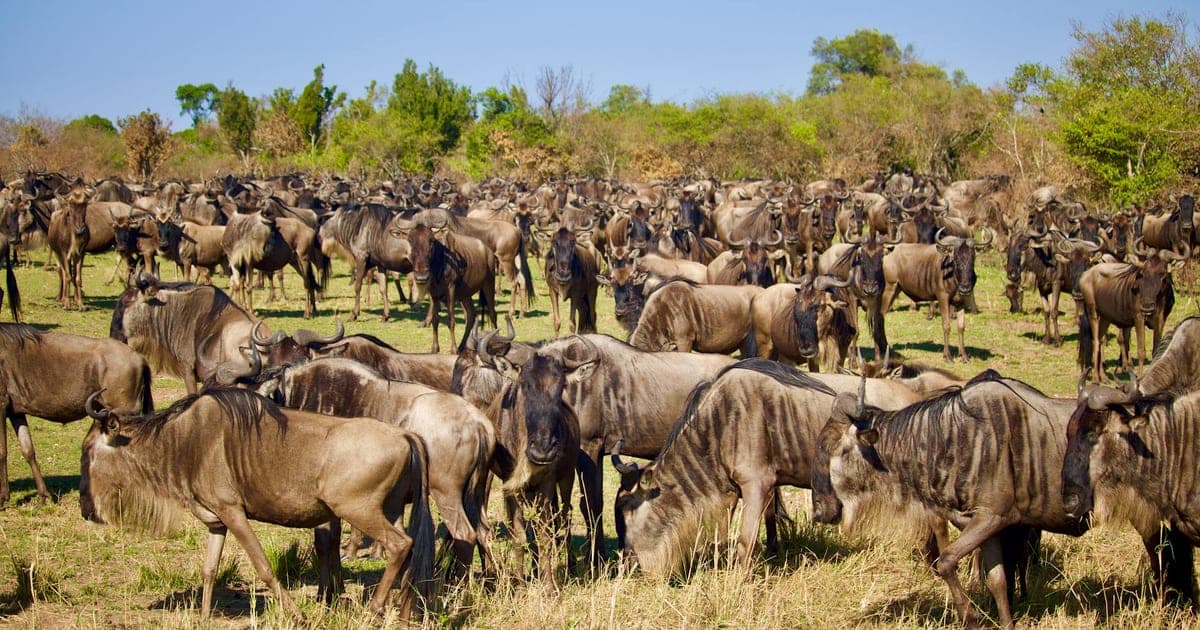
Ogni anno, circa 1,5 milioni di gnu, 400.000 zebre e 200.000 gazzelle compiono un viaggio circolare attraverso l'ecosistema Serengeti-Mara. Percorre circa 2.900 chilometri. Nulla lo ferma — né fiumi, né coccodrilli, né siccità. Accade da oltre un milione di anni ed è, senza esagerazione, il più grande spettacolo di fauna selvatica sulla Terra.
Ma ecco quello che la maggior parte delle guide non ti dice: non esiste un momento sbagliato per vedere la Grande Migrazione. Le mandrie sono sempre da qualche parte. La vera domanda non è se andare — ma quando e dove posizionarsi.
Questa guida analizza la migrazione mese per mese, confronta il Serengeti e il Masai Mara, consiglia campi specifici per ogni stagione e ti fornisce un budget realistico per pianificare davvero questo viaggio.
Il Ciclo Annuale: Mese per Mese
La Grande Migrazione segue un percorso approssimativamente in senso orario attraverso il Serengeti in Tanzania e il Masai Mara in Kenya. La pioggia detta il percorso — le mandrie seguono l'erba fresca.
Gennaio - Marzo: Stagione dei Parti (Serengeti Meridionale / Ndutu)
Questo è uno dei periodi più sottovalutati. Le mandrie si radunano nelle pianure d'erba corta del Serengeti meridionale, intorno alla zona di Ndutu e all'Area di Conservazione del Ngorongoro.
- Cosa succede: Nascono circa 8.000 cuccioli al giorno durante il picco (fine gennaio - metà febbraio). Le pianure sono vive di neonati che muovono i primi passi — e dei predatori che li seguono.
- Perché è speciale: La stagione dei parti attira enormi concentrazioni di leoni, ghepardi e iene. Vedrai più interazioni predatore-preda qui che in quasi qualsiasi altro luogo del pianeta.
- Clima: Le piogge brevi si esauriscono a gennaio. Febbraio-marzo è caldo e relativamente secco con temporali pomeridiani drammatici.
- Folla: Moderata. Questo periodo è sempre più popolare ma resta meno affollato della stagione degli attraversamenti del fiume Mara.
Migliori campi per la stagione dei parti:
- Ndutu Safari Lodge — proprio nella zona dei parti, buon rapporto qualità-prezzo ($350-500/notte)
- Sanctuary Ndutu Under Canvas — campo tendato mobile di lusso che segue le mandrie ($800-1.200/notte)
- Lemala Ndutu — campo tendato sulle rive del Lago Ndutu con guide eccellenti ($600-900/notte)
Aprile - Maggio: Le Piogge Lunghe (Serengeti Centrale)
Le piogge lunghe spingono le mandrie verso nord e ovest. L'erba nel sud si secca e la migrazione inizia la sua marcia verso nord attraverso il Serengeti Centrale (zona della Valle di Seronera).
- Cosa succede: Colonne massicce di gnu si spostano attraverso le pianure centrali. È la stagione degli accoppiamenti — i maschi competono aggressivamente per le femmine.
- Perché è speciale: La stagione verde significa paesaggi rigogliosi, meno veicoli e prezzi drasticamente più bassi. La luce è straordinaria per la fotografia.
- Clima: Pioggia intensa, specialmente ad aprile. Maggio inizia ad asciugarsi. Alcune strade diventano difficili.
- Folla: Bassa stagione. Molti campi offrono sconti del 30-50%.
Migliori campi per la stagione verde:
- Dunia Camp — posizione centrale nel Serengeti, aperto tutto l'anno ($400-600/notte in stagione verde)
- Serengeti Serena Safari Lodge — buona opzione di fascia media con ottime viste centrali ($300-500/notte)
Giugno - Luglio: Corridoio Occidentale e Fiume Grumeti (Serengeti Occidentale)
Le mandrie avanzano nel Corridoio Occidentale verso il fiume Grumeti. Questo è il primo grande attraversamento fluviale del ciclo.
- Cosa succede: Centinaia di migliaia di gnu devono attraversare il fiume Grumeti, infestato di coccodrilli. Il dramma è reale, anche se gli attraversamenti sono meno prevedibili rispetto al fiume Mara.
- Perché è speciale: Molti meno turisti rispetto agli attraversamenti del Mara. Osservazione esclusiva e intima della fauna.
- Clima: Secco e piacevole. Temperature diurne intorno ai 27-29°C, mattine fresche.
- Folla: Moderata e in crescita. Prenota con largo anticipo per i migliori campi.
Migliori campi per l'attraversamento del Grumeti:
- Singita Grumeti — tra le proprietà più lussuose dell'Africa, concessione esclusiva ($2.500-4.000/notte)
- Grumeti Serengeti Tented Camp — lusso più accessibile ($800-1.500/notte)
- Mbalageti Serengeti — opzione economica nel Corridoio Occidentale ($250-400/notte)
Luglio - Ottobre: Attraversamenti del Fiume Mara (Serengeti Settentrionale e Masai Mara)
Questo è ciò che la maggior parte delle persone immagina quando sente "Grande Migrazione" — i drammatici e caotici attraversamenti del fiume. Le mandrie raggiungono il fiume Mara al confine tra Tanzania (Serengeti Settentrionale) e Kenya (Masai Mara).
- Cosa succede: Migliaia di gnu si radunano sulle rive, a volte aspettando giorni prima di lanciarsi nel fiume pieno di coccodrilli. Alcuni attraversamenti coinvolgono oltre 10.000 animali contemporaneamente.
- Perché è speciale: È l'evento più visivamente drammatico del mondo naturale. Le immagini di National Geographic vengono catturate qui. Non dimenticherai mai ciò che vedrai.
- Clima: Stagione secca. Cieli limpidi, eccellente visibilità. Mattine fredde (10-15°C), che salgono a 25-28°C.
- Folla: Alta stagione. Il lato del Masai Mara è più affollato del Serengeti Settentrionale. Prenota 6-12 mesi prima.
Migliori campi per gli attraversamenti del Mara — lato Tanzania (Serengeti Settentrionale):
- Lamai Serengeti — in posizione elevata sopra il fiume Mara, prima fila per gli attraversamenti ($1.200-2.000/notte)
- Sayari Camp — eccellente posizione vicina a più punti di attraversamento ($1.000-1.800/notte)
- Mara Under Canvas — campo tendato mobile che si riposiziona con le mandrie ($600-1.000/notte)
Migliori campi per gli attraversamenti del Mara — lato Kenya (Masai Mara):
- Governors' Il Moran Camp — campo intimo proprio sul fiume Mara ($800-1.400/notte)
- Angama Mara — lodge spettacolare con vista sul Mara dalla scarpata ($1.200-2.000/notte)
- Mara Intrepids Camp — buona opzione di fascia media vicino al fiume Talek ($400-700/notte)
- Basecamp Masai Mara — ecologico, buon rapporto qualità-prezzo ($200-350/notte)
Novembre - Dicembre: Ritorno a Sud (Serengeti Orientale e Loliondo)
Iniziano le piogge brevi e le mandrie cominciano il viaggio di ritorno verso sud. Passano attraverso il Serengeti Orientale e la concessione privata di Loliondo prima di disperdersi nelle pianure meridionali.
- Cosa succede: Le mandrie si dividono in gruppi più piccoli e iniziano a spostarsi verso sud. Le piogge trasformano il paesaggio — tutto diventa verde.
- Perché è speciale: Questo periodo di transizione significa molti meno turisti, prezzi più bassi e l'opportunità di vedere le mandrie con la luce drammatica dei temporali.
- Clima: Piogge brevi — acquazzoni pomeridiani, ma le mattine sono spesso serene. Novembre può essere imprevedibile.
- Folla: Bassa. Ottimo rapporto qualità-prezzo.
Migliori campi per il viaggio di ritorno:
- Namiri Plains — Serengeti orientale, eccellenti avvistamenti di ghepardi e leopardi ($700-1.200/notte)
- Asilia Olakira Migration Camp — campo mobile che segue le mandrie ($600-1.000/notte)
Serengeti (Tanzania) vs. Masai Mara (Kenya)
Entrambi offrono esperienze incredibili con la migrazione, ma sono diversi.
| Fattore | Serengeti (Tanzania) | Masai Mara (Kenya) |
|---|---|---|
| Mesi di migrazione | Tutto l'anno (le mandrie sono sempre da qualche parte) | Solo luglio - ottobre |
| Dimensione | 14.763 km² — enorme | 1.510 km² — compatto |
| Livello di folla | Minore (più disperso) | Maggiore (specialmente ago-set) |
| Attraversamenti fluviali | Grumeti (giu-lug) + Mara dal lato tanzano | Mara dal lato kenyano |
| Stagione dei parti | Gennaio-marzo (Ndutu) | Non disponibile |
| Costo | Tasse del parco più alte ($82/giorno) | Tasse del parco più basse ($80/giorno per non residenti) |
| Accesso | Volo consigliato (aereo leggero) | Auto da Nairobi (5-6 ore) o volo |
| Limite veicoli | Più rigido — meno veicoli per avvistamento | Meno regolamentato, può sembrare affollato agli attraversamenti |
Il verdetto: Se ti interessano solo gli attraversamenti del fiume e hai un budget limitato, il Masai Mara è più accessibile. Se vuoi il ciclo annuale completo, meno folla e più sensazione di natura selvaggia, il Serengeti vince. Molti appassionati di fauna selvatica visitano entrambi in un viaggio combinato Tanzania-Kenya.
Budget: Quanto Costa Davvero un Safari della Grande Migrazione
I prezzi dei safari variano enormemente. Ecco cosa aspettarti a persona per un tipico safari di migrazione di 5-7 giorni.
Safari Economico ($2.000 - $4.000 a persona, 5-7 giorni)
- Alloggio: Campi tendati e lodge economici ($100-250/notte)
- Trasporto: Veicoli safari condivisi
- Include: Game drive, tasse del parco, la maggior parte dei pasti
- Limiti: Gruppi più grandi (6-8 persone per veicolo), meno flessibilità sugli orari, campi base più lontani dai punti migliori
- Ideale per: Viaggiatori al primo safari, chi ha vincoli di tempo
Safari Fascia Media ($4.000 - $8.000 a persona, 5-7 giorni)
- Alloggio: Campi tendati di qualità ($300-600/notte)
- Trasporto: Veicoli privati o semi-privati (4-6 persone)
- Include: Game drive, tasse del parco, tutti i pasti, spesso bevande
- Limiti: Buone posizioni ma non i migliori punti di attraversamento
- Ideale per: La maggior parte dei viaggiatori — miglior equilibrio tra esperienza e prezzo
Safari di Lusso ($8.000 - $15.000+ a persona, 5-7 giorni)
- Alloggio: Campi e lodge premium ($800-2.500/notte)
- Trasporto: Veicolo privato con guida dedicata
- Include: Tutto — voli, trasferimenti, pasti, bevande premium, lavanderia
- Limiti: Nessuno, davvero, tranne il prezzo
- Ideale per: Viaggi unici nella vita, fotografi, luna di miele
Costi Aggiuntivi da Prevedere
| Spesa | Costo Stimato |
|---|---|
| Volo internazionale (dall'Europa/USA) | $800-1.800 andata e ritorno |
| Voli interni (es. Arusha - Serengeti) | $300-600 andata e ritorno |
| Visto Tanzania | $50 (e-visa) |
| e-visa/eTA Kenya | $30 |
| Assicurazione viaggio (tipo safari) | $100-250 |
| Mance (guide, staff del campo) | $20-40/giorno totali |
| Vaccinazioni | $200-500 (febbre gialla, tifo, ecc.) |
| Attrezzatura (binocoli, noleggio obiettivo) | $100-500 |
Consigli Pratici Per il Tuo Safari di Migrazione
Vaccinazioni e Salute
- Il vaccino per la febbre gialla è obbligatorio per entrare sia in Tanzania che in Kenya (porta il certificato)
- Raccomandate: Tifo, Epatite A e B, richiamo Tetano
- Malaria: Entrambi i paesi sono zone malariche. Consulta il tuo medico sulla profilassi (Malarone o Doxiciclina sono scelte comuni). Inizia prima di partire.
- Altitudine: Se visiti il Cratere del Ngorongoro (2.200 m), bevi molta acqua
Visti
- Tanzania: E-visa obbligatorio per la maggior parte delle nazionalità — richiedilo su visa.immigration.go.tz. Costa $50, elaborazione 3-10 giorni.
- Kenya: eTA (Autorizzazione Elettronica di Viaggio) — richiedila su etakenya.go.ke. Costa $30.
- Viaggio combinato: Se visiti entrambi i paesi, servono documenti separati per ciascuno.
Cosa Mettere in Valigia
- Abbigliamento: Strati di colori neutri (cachi, oliva, marrone). Le mattine sono fredde; il mezzogiorno è caldo. Evita blu e nero — le mosche tse-tse sono attratte dai colori scuri.
- Protezione solare: Cappello a tesa larga, crema solare SPF 50, occhiali da sole UV
- Calzature: Scarpe chiuse per i game drive, calzature comode per le passeggiate nella natura
- Binocoli: Essenziali. 8x42 o 10x42 sono ideali per il safari
- Protezione dalla polvere: Un buff o bandana per le strade polverose nella stagione secca
- Corrente: Porta un adattatore universale e un power bank — molti campi hanno ore di ricarica limitate
- Medicinali: Porta tutto ciò di cui potresti aver bisogno. Le farmacie nelle zone remote non esistono.
Attrezzatura Fotografica
- Minimo: Una fotocamera con almeno 200 mm di zoom. Le fotocamere degli smartphone non bastano per la fauna a distanza.
- Ideale: Teleobiettivo 100-400 mm o 200-600 mm. Noleggialo se non lo possiedi — vale ogni centesimo.
- Extra: Sacchetto di fagioli o supporto da finestrino per la stabilizzazione nel veicolo, schede di memoria extra (scatterai migliaia di foto), batterie extra, panno per la pulizia delle lenti dalla polvere.
- Nota sui droni: I droni sono vietati sia nel Serengeti che nel Masai Mara. Non portarne uno.
Lascia Che l'AI Pianifichi il Tuo Safari di Migrazione
Pianificare un safari della Grande Migrazione comporta decine di decisioni — quale mese, quale regione, quali campi, quale lato del confine, budget, logistica, voli di collegamento. È tanto.
L'AI di MonkeyTravel crea un itinerario safari di migrazione personalizzato basato sulle tue date di viaggio, budget e interessi — con raccomandazioni reali di campi, prezzi attuali e pianificazione giorno per giorno per non sprecare neanche un giorno.
Pianifica il Mio Safari — Gratis
FAQ
Qual è il periodo migliore per vedere la Grande Migrazione?
Non esiste un unico periodo "migliore" — dipende da cosa vuoi vedere. Per gli attraversamenti del fiume, da luglio a ottobre. Per la stagione dei parti, da gennaio a marzo. Per prezzi più bassi e meno folla, da aprile a maggio o da novembre a dicembre. Le mandrie sono sempre da qualche parte nell'ecosistema.
Si può vedere la Grande Migrazione sia dalla Tanzania che dal Kenya?
Sì. La migrazione trascorre la maggior parte dell'anno (circa da ottobre a giugno) nel Serengeti in Tanzania e attraversa il confine verso il Masai Mara in Kenya approssimativamente da luglio a ottobre. Puoi visitare uno dei due paesi o entrambi in un viaggio combinato.
Con quanto anticipo devo prenotare un safari di migrazione?
Per l'alta stagione (luglio-ottobre), prenota 6-12 mesi prima. I migliori campi si esauriscono un anno in anticipo. Per la stagione dei parti (gennaio-marzo), 3-6 mesi sono generalmente sufficienti. La stagione verde (aprile-maggio) può spesso essere prenotata 1-3 mesi prima.
È sicuro fare un safari in Tanzania e Kenya?
Sì. Entrambi i paesi hanno industrie turistiche ben consolidate con solidi record di sicurezza. I lodge e i campi per la fauna sono gestiti professionalmente. Le principali preoccupazioni per la salute sono la prevenzione della malaria e mantenersi idratati. Segui sempre le istruzioni della tua guida durante i game drive.
Devo essere in buona forma fisica per un safari di migrazione?
La maggior parte dei safari di migrazione consiste nello spostarsi in veicolo durante i game drive — non è richiesta attività fisica intensa. Starai seduto in un 4x4 per diverse ore al giorno, con pause al campo. Alcuni campi offrono passeggiate opzionali nella natura che richiedono una condizione fisica moderata. I voli in mongolfiera sopra il Serengeti sono anche un'opzione che non richiede alcuna forma fisica.
Fonti: Parco Nazionale del Serengeti, Riserva Nazionale del Masai Mara, Autorità dei Parchi Nazionali della Tanzania (TANAPA), Kenya Wildlife Service, Grande Migrazione — Turismo Tanzania, CDC Salute del Viaggiatore — Tanzania, CDC Salute del Viaggiatore — Kenya